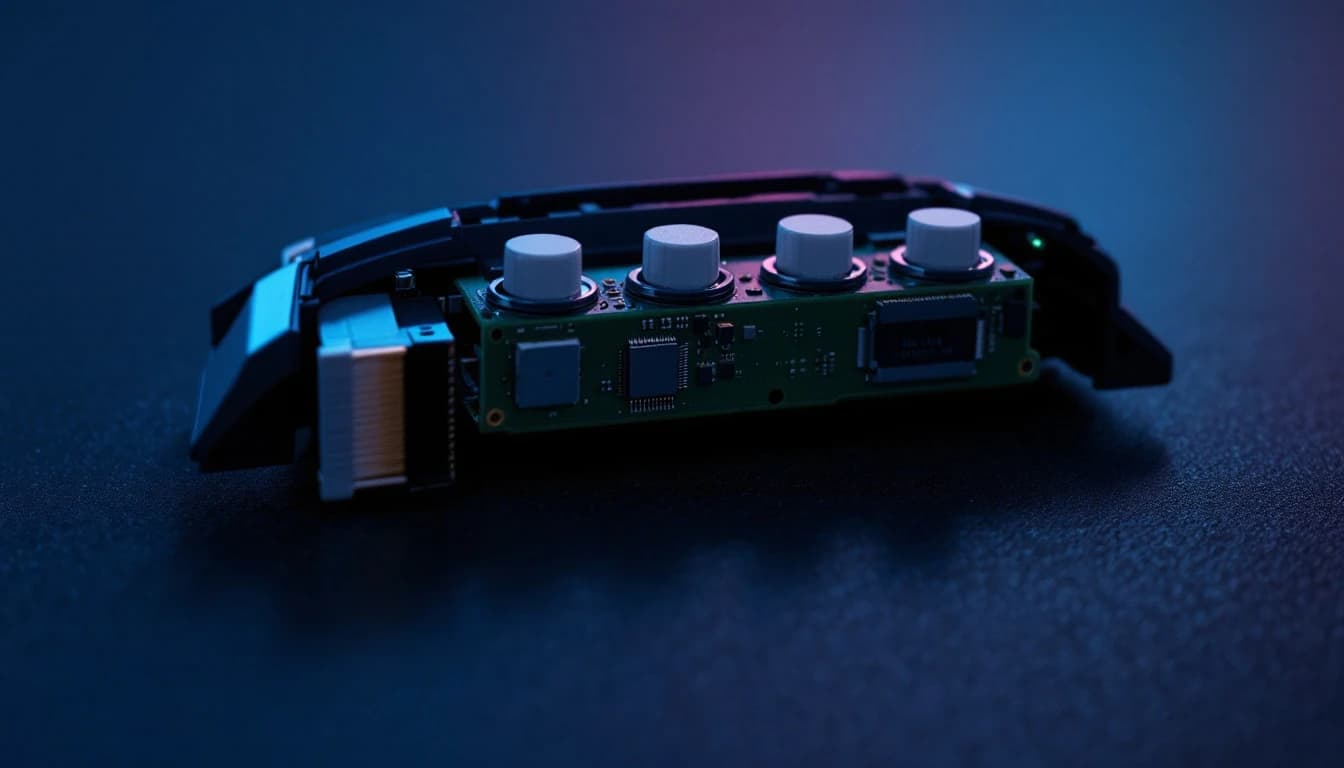
GM Instrument Panel Coded: VIN, Mileage + Theft Deterrent
Why a swapped GM cluster stops the truck
The complaint almost always arrives in the same shape. Somebody installed a cluster from a donor truck, or sent a dead one out for repair and put it back, or upgraded a base gauge package to the higher-trim display. The gauges may even light up. But the engine cranks and will not fire, or a security telltale sits lit on the dash, or the odometer now reads a number that has nothing to do with the vehicle it is bolted into.
None of that is a wiring problem. It is the cluster telling you it has not been coded to this vehicle.
On a modern GM truck or car the instrument panel cluster, usually abbreviated IPC, is not a gauge pod. It is a control module on the vehicle network with its own memory, its own configuration, and on several platforms a direct role in whether the engine is allowed to run. Treating it as a plug-in part is the single most common reason a cluster swap goes sideways.
It also comes up constantly simply because of how many of these vehicles exist. Full-size pickups are the highest-volume segment in the country, and sales reporting compiled by Car and Driver has shown the Chevrolet Silverado and GMC Sierra combining for well over 750,000 units in a single strong year in the United States. Multiply that across two decades of production and cluster failures, donor swaps and trim upgrades become an everyday shop conversation rather than an exotic one.
The three things a GM cluster actually stores
Strip away the needles and the display and the cluster holds three distinct data sets. They are independent of each other, they fail independently, and a job that only fixes one of them leaves you with a truck that still misbehaves.
The VIN. The cluster stores the vehicle identification number of the car it was configured for. It is not decorative. Other modules on the bus compare notes, scan tools read the VIN out of the cluster on many platforms, and on later architectures a module carrying the wrong VIN is treated as a stolen or mismatched part and locked out. A donor cluster arrives carrying the donor VIN, and until that is rewritten it is, from the vehicle point of view, somebody else equipment.
The odometer. On GM the cluster is generally the authoritative odometer store, and the value is mirrored or cross-checked in other modules such as the body control module and the engine controller depending on the platform and year. This is why a used cluster shows the donor mileage, and why the correct fix is never to type in a number somebody likes. The genuine recorded mileage is read out of your original cluster, or out of the surviving modules when the original is destroyed, and written into the replacement so the whole vehicle agrees.
That distinction matters legally as well as technically. Odometer fraud is a federal offence, written disclosure obligations follow the vehicle at every sale under rules the Federal Trade Commission enforces alongside the federal odometer statute, and the scale of the problem is why those rules are strict: NHTSA has estimated that well over 400,000 vehicles change hands each year in the United States with false odometer readings, and Carfax has put the number of vehicles on American roads with rolled-back odometers at roughly two million. A legitimate cluster service syncs to true mileage only. There is no version of this job that involves lowering a number.
The configuration. General Motors builds every vehicle against a regular production option code list, and the cluster has to know which one it is sitting in. Engine family, transmission, fuel type, tire and axle ratio, driver information centre content, units of measure, trailer and diesel content, tow-haul, gauge sweep, warning-lamp population. A cluster with the wrong configuration produces the strange half-broken symptoms people describe as ghost problems: a fuel gauge that reads wrong, a driver information centre missing menus, a temperature gauge that never moves, a diesel truck with no exhaust filter messaging.
The part people miss: the theft-deterrent relationship
Here is the piece that turns a cosmetic upgrade into a no-start, and it is the reason this article exists.
GM anti-theft is not one system in one box. It is a conversation between modules, and the cluster is a participant in that conversation on a great many platforms.
Across the resistor-key VATS era, the Passlock era, and the transponder Passkey III era, the shape is broadly the same. Something authenticates the key, whether that is the resistance value of a pellet in the blade, a Hall-effect signal from the lock cylinder, or a transponder challenge at the antenna ring. That authentication is evaluated by a module. That module then has to tell the powertrain controller it is allowed to deliver fuel. If the message never arrives, or arrives wrong, the engine cranks and dies or never fires.
Where the cluster comes in varies by platform, and this is exactly where people get caught out:
- On several GM car platforms, the W-body sedans in particular, the theft-deterrent data lives in the instrument cluster itself. Swap the cluster and you have swapped the theft-deterrent memory. The car will crank and not start, and no amount of relearn on the lock cylinder fixes it, because the cluster is holding a password that belongs to a different vehicle.
- On the full-size trucks and SUVs the body control module usually owns the Passlock relationship, but the cluster sits on the same serial data network, displays the security telltale, and participates in the relearn sequence. A cluster that does not match the vehicle can leave the telltale illuminated, break the relearn, or report a theft-system fault that sends people chasing a BCM they did not need to replace.
- On the later Global A and Global B architectures the whole module set is VIN-aware. A used cluster, radio, or screen module from a donor arrives locked to the donor VIN, and it announces that with a theft-lock screen or a refusal to function rather than a subtle gauge fault.
If your symptom is the security light and a no-start rather than a gauge problem, the platform-specific walk-through in our GM Passlock anti-theft fix guide is the better starting point, because the fix depends heavily on which of those three eras your vehicle sits in.
The stakes behind all this security engineering are not theoretical. The National Insurance Crime Bureau has tracked vehicle theft volumes on the order of one million vehicles a year in recent United States reporting, and research summarised by the Insurance Institute for Highway Safety has credited electronic immobiliser systems with theft-loss reductions in the range of forty percent against comparable vehicles without them. Manufacturers lock these modules down because locking them down works. The cost of that is that legitimate repairs need legitimate coding.
The calls I get are almost never about gauges. Somebody bought a nice cluster out of a wrecked truck, put it in, and now their own truck will not start, and they are convinced they broke something. They did not break anything. The cluster is still loyal to the truck it came out of, and nothing on the vehicle side is going to talk it out of that. — Independent GM driveability and module technician, 17+ years, anonymized
Why an SPS session alone will not fix an uncoded cluster
This is the second thing that surprises people, usually after they have already paid for a dealer appointment.
GM Service Programming System is the manufacturer tool for delivering software and calibrations to modules and for performing setup on a new, never-configured part. Used correctly on a brand-new cluster ordered against your VIN, it works as designed: the part is virgin, the setup routine writes the vehicle data, and you drive away.
It does not solve the used-cluster problem, for reasons that are structural rather than a matter of the dealer trying harder:
- A used cluster is not virgin. It already holds a VIN, a configuration, and an odometer value. The factory setup routine is written for a blank part, not for one that has to be moved off another vehicle identity.
- The odometer is not something SPS transfers between two used parts. Moving genuine recorded mileage from your original cluster into a replacement is a data operation on the stored value, and it is deliberately not a customer-facing tool function.
- On Global A and Global B the used part is theft-locked before the conversation even starts. The module refuses normal operation until the lock tied to the previous VIN is cleared. On Global A (~2014–2019) that is the same class of problem we handle on used screen and radio modules through the GM HMI, radio and cluster VIN unlock service — Global B modules use a different security architecture we cannot unlock on the bench, and we do not offer them.
- An upgrade is not a repair scenario. A base-to-higher-trim cluster swap is not something a factory setup routine is designed to bless, because from the manufacturer point of view the truck was not built with that part.
None of this means the dealer path is wrong. If you are buying a brand-new cluster through a store and paying their labour, the factory routine is a perfectly reasonable way to get it done. It means that if you have a used, donor, upgrade, or already-configured cluster in your hands, the factory routine is not the tool that will get you home.
The two paths, side by side
| New GM cluster set up by the factory routine | Used, donor, or upgrade cluster coded on the bench | |
|---|---|---|
| Starting condition | Virgin part, never configured to a vehicle | Already carries another VIN, mileage and option set |
| VIN | Written by the setup routine at the dealer | Written on the bench to your VIN |
| Odometer | Comes from the setup process on a blank part | True recorded mileage read from your original, or from surviving modules, and written across |
| Theft-deterrent link | Relearn performed on the vehicle | Prior link cleared and re-established so your existing keys start it |
| Option and RPO content | Pulled from the factory build record | Set to match the equipment your truck actually has |
| Used or upgrade part accepted | Generally refused, or theft-locked on Global A and B | This is the exact case the service exists for |
| Where the work happens | At a dealership, vehicle present | Mail-in, module only, nothing driven anywhere |
| What you pay | Part plus dealer labour, quoted by the store | Flat bench price, listed below |
What the bench work actually looks like
The sequence is the same whether the cluster came off your own truck or out of a donor, and it is deliberately conservative because the odometer is involved.
Read first, write nothing. The original cluster, if it still communicates, is read and the complete data set archived before anything is modified. That archive is the evidence trail for the mileage value, and it is what makes a later question answerable.
Establish the true mileage. The genuine value comes from your original cluster. When the original is dead beyond reading, it comes from the mileage other modules on the vehicle recorded, or from a documented reading such as a recent inspection record or a photograph of the last known odometer. It never comes from a number a customer would prefer. If you want the legal framing in more depth, we wrote it up separately in the odometer correction and cluster sync legality guide.
Write the VIN. The replacement is moved onto your vehicle identity so the rest of the bus stops treating it as a foreign part.
Set the configuration. Engine, transmission, fuel type, units, driver information centre content, gauge population and the rest of the option data are matched to your truck, not to whatever the donor was built as.
Clear and re-establish the theft-deterrent relationship. The link the module carried to its previous vehicle is cleared, and the theft-deterrent state is set so the vehicle keys you already own continue to start the engine. This is the step that turns a cluster that lights up into a cluster that lets the engine run.
Bench verify, photograph, ship back. The programmed value is verified and photographed before the module leaves, so the number on the bench and the number you see when you install it are the same number.
Work is performed on our bench at 1168 W Pioneer Parkway, Arlington, TX 76013. Modules are mailed in: USPS to PO Box 120241, Arlington, TX 76012, or UPS and FedEx to 1009 Oakwood Ln # 120241, Arlington, TX 76012, because UPS and FedEx cannot deliver to a USPS post office box. Return shipping is chosen and paid at checkout starting at $29.95 for standard service, with two-day and overnight tiers available.
Which service you actually need
There are two distinct jobs hiding under the phrase getting the cluster coded, and picking the wrong one wastes a shipping cycle.
The repair and sync path. Your cluster failed, or you have a replacement that needs your data in it, and you are not changing trim level. That is instrument cluster repair with mileage sync at $200 flat, an all-makes service that covers dead clusters, display faults, and moving true mileage onto a replacement unit.
The GM upgrade and VIN-marry path. You are on a GM full-size truck or SUV and you either swapped in a donor cluster or you are moving up a trim level, base gauges to the higher-trim colour display. That is the GM instrument cluster upgrade and mileage program service at $300 flat, which covers VIN marriage, true mileage sync, and clearing the theft-deterrent state so your keys still start the truck. Coverage spans the analog clusters through the NBS, K2, and T1 generations on Silverado, Sierra, Tahoe, Yukon, Suburban, Escalade and their relatives.
The supplied-part path. If you do not want to hunt a donor at all, the GM Denali cluster upgrade kit supplies a brand-new eight-inch colour cluster for 2014 to 2020 K2 trucks and SUVs at $699, programmed to your VIN and options before it ships, with no core required and nothing to send in first.
Two adjacent services come up constantly on the same trucks. When the theft-deterrent trouble turns out to be body-control-module side rather than cluster side, the GM BCM standalone clone at $199 moves VIN, mileage, theft data and option coding from a failed 2003 to 2015 BCM onto a matching donor. And on the older resistor-key vehicles where the anti-theft system itself is the failure rather than the cluster, GM VATS delete at $250 handles the ECM side for 1986 to 2005 applications.
Any work that touches an immobiliser, key, or theft-deterrent function requires proof of ownership. That is not a formality we can waive on request, and it applies to cluster work exactly as it applies to key programming.
How other manufacturers handle the same problem
It is worth knowing that GM is not unusual here, only specific.
Volkswagen and Audi took the same idea further: on those cars the cluster stores immobiliser data, the VIN, component protection and the odometer together, so a donor cluster does not merely misbehave, it actively fights the car. The fix is a full clone of the original data set onto a matched donor rather than a configuration write, which is why we treat it as its own service and wrote it up in the VW and Audi cluster clone and dash swap guide. Reading that alongside this one is the fastest way to understand what the industry as a whole is doing: the cluster stopped being a gauge pod two decades ago, and every manufacturer solved the security problem in its own dialect.
The practical takeaway is identical across brands. A cluster is a coded module. Move it, and the coding moves with it or the vehicle rejects it.
Frequently asked questions
What does it mean when someone says the GM instrument panel is coded to the vehicle? It means the cluster holds three vehicle-specific data sets in its own memory: your VIN, the recorded odometer value, and the option or RPO configuration, plus a theft-deterrent relationship with the body control module and engine controller. A cluster from another vehicle carries that other vehicle data until it is rewritten, which is why swapping one in without coding produces no-starts, security lights, and wrong mileage.
Why does my truck crank but not start after I installed a used cluster? Because the theft-deterrent system is not satisfied. On some GM platforms the cluster itself stores the theft-deterrent data, and on others it is a participant in the relearn and the message path that tells the powertrain controller to enable fuel. Either way, a cluster still bound to a donor vehicle can leave the engine cranking without firing until the link is cleared and re-established for your VIN.
Can the dealer just program it with a factory SPS session? Only if the cluster is brand new and has never been configured. The factory setup routine is designed for a virgin part, so it does not move a used cluster off the VIN it already carries, does not transfer true mileage between two used clusters, and does not resolve the theft lock a Global A or Global B module applies when it sees the wrong VIN.
Will my existing keys still work after the cluster is coded? Yes. Re-establishing the theft-deterrent state for your VIN is part of the job specifically so the keys you already own continue to start the vehicle. That is one of the main reasons the work is done properly on the bench rather than by simply bolting in a donor unit and hoping.
Can you set the odometer to a lower number, or to the number my old cluster showed before it broke? No. Mileage work is a sync to the genuine recorded value only, read from your original cluster or from the other modules that recorded it, and rollbacks are refused without exception. If the original cluster is unreadable we sync to a documented reading such as an inspection record or a dated photograph of the last known odometer.
Do I have to send both clusters in? Send both whenever you still have the original, because the original is the cleanest source of your true mileage and coding. If the original is destroyed, unreadable, or already gone, send the replacement along with your VIN and documentation of the last known odometer reading, and the data is reconstructed from the surviving modules and your paperwork.
Is a base to higher-trim cluster upgrade actually supported, or does it just look right? It is supported as a real coding job, not a cosmetic swap. The upgraded cluster is married to your VIN, the true mileage is written across, the option configuration is set so the gauges and driver information content match your truck, and the theft-deterrent state is cleared so the vehicle starts normally on your existing keys.
The bottom line
Coded to the vehicle is not parts-counter jargon. It is an accurate description of a module that holds your VIN, your odometer, your option configuration, and a share of the anti-theft handshake that decides whether the engine gets fuel. Ignore any one of those and you get a symptom that looks electrical and is actually identity.
A brand-new cluster ordered against your VIN and set up by the factory routine is a legitimate path. Everything else, a used donor, a repaired original, a trim upgrade, a Global A or Global B module that arrived theft-locked, is bench work: read the original, transfer the true recorded mileage, write your VIN, set the configuration, and clear the theft-deterrent link so your keys still start the truck.
On the GM side that is $300 flat for the cluster upgrade and mileage program, $200 flat for the all-makes repair and mileage sync, and $699 for a supplied new Denali-style cluster kit on 2014 to 2020 K2 trucks. All of it is mail-in to the Arlington bench, with return shipping chosen and paid at checkout from $29.95, and proof of ownership required on anything touching the theft-deterrent system. Text us the VIN, the cluster part number, and a photo of the label, and we will confirm the right path before you ship anything.
Ship your module today
Flat-rate pricing, typical 24-hour bench turnaround, return speed your choice at checkout. Most jobs back on your bench within a week.