Immo Off ECU Cost by Make — Mail-In Bench (2026)
What an immo off or EWS delete costs by mail
An immo off, also called an immobilizer delete, costs a flat $199 to $500 at Auto Module Lab, set by the make and the engine-ECU family. Honda, Acura and Ford PATS jobs are $199, most other makes are $250, GM Pass-Key III+ and the VW and Audi UDS recovery are $350, and the Maserati ECU is $500. You mail the engine computer, we edit it on the bench, and we ship it back. Return shipping is paid at checkout from $29.95, and proof of ownership is required.
As of October 2026, these are the live prices on our service pages. Nothing in this guide is an estimate, and nothing is a "starting at" figure that grows once the module arrives. If your make is not in the table below, text us the VIN and the ECU label before you ship anything and we will tell you honestly whether it is something we do.
We run a national mail-in bench. There is no walk-in counter and no on-site visit in this guide. The module comes to us in a padded box and the same module goes back to you, so the price does not depend on where in the country you live.
What "immo off" and "EWS delete" actually mean
Most late-model engine computers will not allow fuel and spark until something outside the engine computer vouches for the key. That outside party is a body computer, an instrument cluster, a dedicated immobilizer box, or a key-reader module. On older BMWs it is the EWS module, which stands for Elektronische Wegfahrsperre, the electronic drive-away lock. On older GM trucks it is the VATS or Pass-Key logic, on Ford it is PATS, on Chrysler it is the Sentry Key Immobilizer, and on VW and Audi it usually lives in the cluster or the ECU itself.
An immo off changes the engine computer so it no longer waits for that approval. We read the module on the bench, remove or neutralize the immobilizer routine in the stored data, correct the checksum so the unit accepts its own memory, and write it back. The result is an engine computer that runs without needing a matching key, cluster or body module. That is all it does. It does not change fuel maps, it does not touch emissions, and it does not turn your car into one that "starts with any key" in the sense that a thief could use it, because the rest of the car is unchanged and the ECU you mailed us is the ECU going back in the car.
"EWS delete" is the BMW name for the same idea. The DME stops asking the EWS module for permission. Our BMW DME EWS delete bench programming guide covers the DME families in detail, including why MS41 and MS43 behave differently from MSS54, and why you should not confuse a delete with an EWS resync or a key add. This cost guide is the all-makes price map; that one is the deep dive on the BMW side.
The price table: every immo off we run, by make
Every price below comes from the service page it links to. These are flat bench prices for the engine-ECU edit itself. Return shipping is separate and chosen at checkout.
| Make and job | ECU or system | Flat bench price |
|---|---|---|
| Honda and Acura ECU immo off | 1998-2017 engine ECUs | $199 |
| Ford PATS delete | 1996+ Ford, Lincoln, Mercury PCMs | $199 |
| BMW DME EWS delete | MS41 through MSS70, ME 5.2 to 9.2 | $250 |
| VW and Audi immo delete with VIN | VW and Audi ECM | $250 |
| VW and Audi ME7 immo off | Bosch ME7.x gasoline | $250 |
| VW and Audi EDC16 TDI immo delete | Bosch EDC16 diesel, 2004-2009 | $250 |
| Toyota and Lexus Denso immo off | Denso ECUs, 1998-2018 | $250 |
| GM VATS delete | 1986-2005 GM ECMs | $250 |
| GM ECU immo off | E98, E80, E82, E84 | $250 |
| Chrysler, Dodge, Jeep Sentry Key delete | SKIM, SKREEM, WIN PCMs | $250 |
| GM Pass-Key III+ immobilizer delete | Global A era, about 2006-2015 | $350 |
| VW and Audi UDS immo off | UDS-cluster cars, 2011-2016, last resort | $350 |
| Maserati ECU immo off | Bosch ME7 ECU, GranTurismo, Quattroporte | $500 |
One related job is deliberately not in the delete column. The Toyota and Lexus ECU immobilizer reset is $250, but it is not a delete. On roughly 1997 to 2010 turn-key Toyotas we reset the key registers inside the Denso ECU and program a new transponder key, with the factory immobilizer still active. We list it here because people searching for an immo off on an old Camry or Tacoma often really need that reset instead.
We also run clone-with-immo-off jobs on VW and Audi EDC15, EDC17 and PCR2.1 families, each a flat $250 on their own service pages. Those are clones that arrive with the immobilizer already disabled, which is a different order from a straight delete on your original.
What changes the price
The flat prices are flat on purpose, but they do vary across the table, and the reasons are mechanical rather than arbitrary.
The ECU family. A Honda or Ford PCM at $199 is a mature, well-understood job. A GM Pass-Key III+ delete at $350 involves a newer authorization scheme that sits between the ECM and the BCM, and the Maserati at $500 is a low-volume Ferrari-derived controller where every step costs more bench time. The price reflects how much work the family takes on our bench, not how much the car is worth.
Whether the job is a delete or a recovery. The UDS jobs at $350 are described on the service page as a last resort. They are for cars where a previous key or immobilizer attempt left the cluster bricked. The car will run afterward, but expect a permanent immobilizer light and stored codes, and some cluster-routed comfort features may behave differently. We price that honestly higher because it is a recovery, and we tell you the trade-offs before you order.
Return shipping tier. Return shipping is never bundled into the bench price. You pick it at checkout. Standard return shipping starts from $29.95, UPS 2nd Day Air is $54.95, and UPS Next Day Air is $94.95. If your car is parked and you need it on the road, the faster tier is usually cheaper than another week of rental. The bench work itself is typically a 24-hour turnaround on most jobs in the table, and each service page states its own turnaround.
What the price does not change with. It does not change with the year of the car inside the supported range, with the model on the ECU label, or with how many keys you have lost. It does not change with your location. A bricked module that cannot be saved is a different conversation, and we say so before any additional charge is possible.
Immo off, clone or key programming: which one do you need?
This is the most important section of the guide, because most of the failed immo-off orders we hear about were the wrong fix to begin with.
Choose a clone when you are keeping the car's security system. If the original ECU is dead but the rest of the car is healthy, a clone moves your car's identity and immobilizer data onto a replacement unit. The immobilizer stays on, your keys keep working, and nothing about the car's security is changed. Our guide on online ECU immo off versus mail-in service explains why some people try to do this over an online session and when the bench is the safer path.
Choose key programming when the ECU is fine but you have lost keys. If the engine computer is healthy and every key is lost, deleting the immobilizer is usually overkill and removes a feature you may want. Programming a new key to the existing system is a smaller, cleaner job on most platforms.
Choose immo off when the original immobilizer chain is gone or does not belong. That means an engine or ECU transplanted into a different chassis, a build with no matching cluster or body module, a bench-test rig, an orphaned platform where the immobilizer hardware cannot be sourced, or an off-road build where the original harness no longer exists. It also means a car whose immobilizer is dead and the repair would cost more than the car. Our explainer on when an immobilizer delete is the right call walks through these cases in more depth.
A quick test we use in text: if you still have the original ECU, the original cluster or body module and the car it came from, and you only lack a key, you probably want key programming. If you are putting an ECU into a car it did not come out of, you probably want a delete or a clone, depending on whether you also have the donor's matching modules.
For a long-form price breakdown on one make, see our VW and Audi immo off cost and turnaround guide, which separates ME7, EDC16, MED17 and UDS and explains the family differences that the table above compresses into a single line.
The legal framing, plainly
Immobilizers exist to stop theft, and they work. The National Insurance Crime Bureau reported more than 1 million vehicle thefts in the United States in 2023 and then a decline of roughly 17 percent in 2024, and it has repeatedly pointed to the thieves who target the vehicles whose security can be defeated. The Insurance Institute for Highway Safety and its Highway Loss Data Institute have credited standard electronic immobilizers with cutting theft-claim frequency by roughly 40 percent in studies of models that added them. Federal theft-prevention requirements are overseen by the National Highway Traffic Safety Administration. We take that seriously, and it is why the rules on our bench are firm.
A good immobilizer delete is boring. The ECU comes in with a known history, the owner can prove it is theirs, the car it is going into makes sense, and the work is the same every time. When one of those four things is missing, we stop. — Independent European-car driveability technician, 18+ years (anonymized)
In practice that means the following.
- Immo off is for legitimate repair, off-road, orphaned-platform and engine-swap use. That is a dead immobilizer you cannot economically re-sync, a transplant into a chassis with no matching security hardware, a standalone or competition build where legally permitted, or a platform whose security parts are no longer made.
- Proof of ownership is required on every job. Immobilizer, key and security work always requires documentation that the vehicle or the module is yours before we begin. No exceptions, and no exceptions for friends of friends.
- We do not perform emissions edits. The GM and UDS pages say this explicitly, and it applies across the table. An immo off changes the immobilizer routine and nothing else.
- You are responsible for lawful use. An immo off on a car that stays on public roads is a decision about your own insurance and local rules. We do the bench work; the compliance is yours.
- Mileage is not part of this job. If a cluster swap is involved in your project, mileage sync is done only to the true mileage, which is covered on the cluster service pages, not here.
If you are not sure whether your situation fits, text us what you are doing in plain words. We would rather say "that is not what an immo off is for" than take the order.
Make by make: what to expect
BMW. The EWS delete at $250 covers MS41, MS42, MS43, MS45, ME 5.2, 7.2 and 9.2, and the MSS50 to MSS70 family. After the delete the DME starts without the EWS module and without key matching when it goes back in. The most common reasons are a dead EWS, a lost-keys situation on a car where a simple repair is not worth it, and an engine swap into an E30 or E36. Newer BMWs with CAS, FEM or BDC are a different system and are covered by clone and bricked-module recovery services, not by an EWS delete.
VW and Audi. This is the biggest family. ME7 gasoline and EDC16 diesel are $250 deletes, the generic immo delete with VIN is $250, and UDS-cluster cars from about 2011 to 2016 are $350 as a last-resort recovery. The right one depends on the ECU label, not on the model name. Our VW and Audi guide above explains how to read it.
Toyota and Lexus. The Denso immo off at $250 covers 1998 to 2018 in the page's model list. If the car is a 1997 to 2010 turn-key vehicle with all keys lost, ask about the immobilizer reset first, because it keeps the factory security active and gives you a working key.
GM. Three jobs live here and they are easy to confuse. VATS is the 1986 to 2005 resistor-pellet system and is a $250 delete. The E98, E80, E82 and E84 ECU immo off is $250 and is aimed squarely at LS and LT engine swaps and standalone builds. Pass-Key III+ is the later transponder system and is a $350 delete. GM calibration tools label the ECM side "VATS" for both, which is why people order the wrong one. If you are not sure, text us the ECM number.
Ford. PATS delete is $199 for 1996 and later PCMs, and it is one of the quickest jobs on the bench. After the delete, any physical key that fits the ignition will turn the car over, because the transponder is no longer part of the start permission.
Chrysler, Dodge and Jeep. The Sentry Key delete is $250 and removes the SKIM, SKREEM or WIN challenge from the PCM. It is the standard answer for an engine swap or a salvage controller with no matching module. Chipped keys and plain keys both work after the delete.
Honda and Acura. At $199 this is the lowest-priced entry, for 1998 to 2017 ECUs. Common scenarios are a used-ECU swap, a failed dealer pairing attempt, and lost keys where nobody nearby has the factory tool.
Maserati. The $500 job is the Bosch ME7 ECU used on the GranTurismo, GranCabrio and Quattroporte with the Ferrari-derived V8s, for repair, engine-swap, standalone and orphaned-immobilizer builds.
What to ship and what turnaround to expect
Shipping a module is simple if you do it in the right order.
- Text us first. Send the VIN, a clear photo of the ECU label and a short description: dead immobilizer, engine swap, orphaned platform or bench build. We confirm the ECU family and whether the job is a delete, a clone or something else.
- Order the matching service online. Pick the page from the table, add it to the cart, and choose your return shipping tier at checkout. Return shipping is paid by you at checkout and is never included in the bench price.
- Provide proof of ownership. A title, registration or bill of sale that shows the vehicle or module is yours.
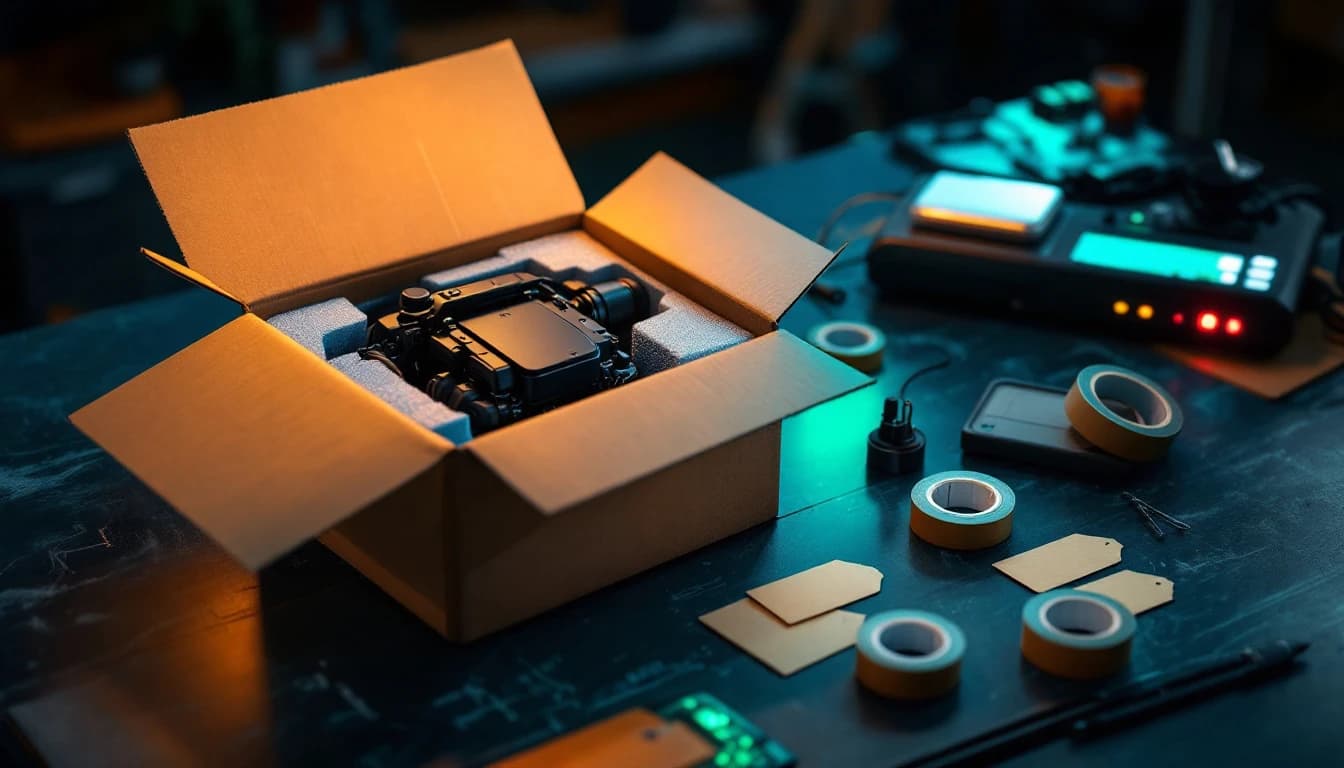
- Remove the engine computer carefully. Disconnect the battery first. Do not pry on the connector, and do not open the case. Pack it in a rigid box with padding so it cannot move, and keep it out of anti-static trouble by leaving it in its bag or wrapping it in foam, not loose bubble wrap against the pins.
- Include your order number and the VIN. Put both on a slip inside the box.
- Wait for the bench. Typical bench turnaround is 24 hours on most jobs in the table, and each service page states its own. Transit each way adds the days your chosen shipping tier takes. Standard return shipping from $29.95 is the economical choice, and UPS 2nd Day at $54.95 or Next Day at $94.95 is for cars that are parked.
When it comes back, reinstall it and test. On a delete the engine should start and run without the security light fighting you. If anything on the car behaves oddly, text us with the order number and what you see. We would rather sort it out in a message than have you chase a second problem.
The market context, with numbers
A few numbers explain why this job keeps growing. The average light vehicle on American roads is now older than 12 years according to S&P Global Mobility, which means a huge installed base of cars whose original immobilizer parts are discontinued, scarce or priced beyond sense. Dealer replacement of a new ECU plus key programming on a car of that age can easily exceed the value of the car, which is why a bench edit on your own module is such a common route.
At the same time, the Society of Automotive Engineers publishes the standards that underpin the diagnostic and security protocols modern ECUs use, and the move from the simple resistor pellet of 1986 to the encrypted transponder handshake of the 2000s explains why a Honda at $199 and a Pass-Key III+ at $350 are different amounts of work. Specialist coverage in outlets such as MotorTrend and Car and Driver has also documented how often engine swaps into older chassis run into immobilizer problems, which is the single most common reason people order our $250 deletes.
Used-car history sites such as CARFAX are worth a look before you buy a donor engine or ECU, since the history tells you whether the unit came from a legitimately salvaged vehicle. That is a good habit, because proof of ownership applies to the module you ship us, and a clean paper trail makes the order easy.
Frequently asked questions
How much does an immo off ECU service cost? An immo off costs between $199 and $500 depending on the make and ECU family. Honda, Acura and Ford PATS jobs are $199, most BMW, VW, Audi, Toyota, Lexus, GM and Chrysler jobs are $250, GM Pass-Key III+ and VW and Audi UDS are $350, and Maserati is $500. Return shipping is paid at checkout from $29.95.
What is an EWS delete? An EWS delete is the BMW version of an immo off. We edit the DME so it no longer needs the EWS immobilizer module to allow a start, covering MS41 through MSS70 and the ME 5.2 to 9.2 families, for $250. It is bench work, typically a 24-hour turnaround, and it requires proof of ownership.
Is immo off legal? Immo off is a legitimate repair tool when used for a dead immobilizer, an engine swap, an off-road or competition build, or an orphaned platform, where local law allows it. We require proof of ownership on every job and we do not perform emissions edits. You are responsible for how the car is used on public roads.
Will the car start with any key after an immo off? Yes, on most deletes any key that physically fits the ignition will crank the engine, because the transponder is no longer part of the start permission. That is exactly why we require proof of ownership and why we treat the job as a repair or build tool, not a general convenience. Toyota resets keep the factory security active instead.
How long does an immo off take, and what do I need to send? The bench work is typically 24 hours on most jobs, plus transit each way. Send only the engine computer, with your VIN, a photo of the ECU label and your proof of ownership. Return shipping is paid at checkout, from $29.95 for Standard, $54.95 for UPS 2nd Day, or $94.95 for UPS Next Day.
Should I get an immo off, a clone or a key programmed? It depends on what is broken. Clone when the ECU is dead but you want to keep the security system, program a key when the ECU is healthy and only keys are lost, and choose an immo off when the original immobilizer chain is gone or the ECU is going into a car it did not come from. Text us the VIN and label and we will tell you.
Do you remove the immobilizer from the whole car? No, we edit only the engine computer you mail us. The body module, cluster and the rest of the security architecture stay as they are, which is also why the car can still be returned to stock by reinstalling a matching module. Anything beyond the ECU is a separate service with its own price.
The bottom line
An immo off is a flat-price bench job, from $199 for Honda, Acura and Ford up to $500 for Maserati, with most makes at $250. Pick the page that matches your make and ECU family, confirm it with a text and a photo of the label, and pay return shipping at checkout from $29.95. Use it for the cases it was built for: a dead immobilizer, an engine swap, an off-road or competition build, or an orphaned platform. Bring proof of ownership, expect a bench turnaround of about 24 hours on most jobs, and if a clone or a key is the better fix, we will say so before you ship.
Ship it for the bmw dme ews delete (ms41/42/43/45, mss50-70) — $250 flat
Typical 24-Hour Turnaround, return speed your choice at checkout. Prepaid inbound label by email the minute you order.