
2014-2016 Jeep Wrangler JK ABS Module Failure Guide
Why the 2014-2016 JK is the Wrangler failing now
The JK Wrangler was built from 2007 to 2018, but the three model years in the middle of its second half were the biggest. Jeep sold roughly 175,000 Wranglers in the United States in 2014, roughly 203,000 in 2015 and roughly 192,000 in 2016 according to the Stellantis North America newsroom, the strongest run the model had before the JL replaced it. Those Jeeps are now ten to twelve years old, and the average light vehicle on U.S. roads was about 12.6 years old in 2024 according to S&P Global Mobility, which is to say the largest JK population ever built is arriving at exactly the age where an under-hood electronic module that has lived through a decade of heat, vibration, water and vibration again gives up.
That is why this guide exists alongside the broader Wrangler JK ABS module guide, which covers the whole 2007 to 2018 run. This page is about the late-JK trucks specifically: the 3.6-litre Pentastar cars with the five-speed automatic or six-speed manual, the Sport, Sahara and Rubicon, the Willys Wheeler, the Rubicon Hard Rock, the 75th Anniversary editions of 2016 and the four-door Unlimited that made up most of the volume. What fails on them, what their owners do to them that complicates the diagnosis, and what the honest fix costs.
What the dash is telling you
The failure announces itself the same way on nearly every JK. The ABS lamp, the ESP/BAS lamp and the traction-control lamp come on together, usually with a chime, and the systems behind them switch off. Hydraulic braking is normal; the pedal is fine. On many trucks the speedometer drops to zero because the cluster takes vehicle speed from the ABS controller. On some, the cruise control stops working for the same reason.
All three lamps light together because all three functions share one controller: an electronic control unit bolted to a hydraulic control unit with the pump and the solenoid valve block, running anti-lock, electronic stability, brake assist and traction control off one processor and one set of wheel-speed inputs. An internal fault takes every function down in the same instant.
The most JK-specific symptom is the pump that will not stop. When the pump-motor relay or driver inside the controller sticks on, the ABS pump keeps running after key-off and the battery is flat by morning. If you have had a dead battery more than once and can hear a motor humming under the hood with the key out, you have found the module before reading a single code.
The codes that name the module
Read the ABS controller's own codes with a scan tool that can talk to the brake module. A cheap reader that only sees engine codes will show nothing useful.
| Code | What it means | On a late JK it usually is |
|---|---|---|
| C2200 | ABS control module internal failure | A failed driver stage or corrupted memory inside the controller; nothing outside the unit sets this |
| C2116 | ABS pump-motor supply voltage low | The pump-motor driver or relay inside the controller; the stuck-pump, dead-battery case |
| U0121 | Lost communication with the ABS module | The controller has gone quiet on the bus; prove power and ground at its connector before condemning it |
| C2100 | Controller supply voltage out of range | Battery, charging or a ground; not a module verdict on its own |
| C1xxx codes naming a wheel | Wheel-speed sensor circuit or signal at one corner | A sensor, tone ring, hub or harness at that wheel |
| ESP/BAS lamp alone, with a steering-angle code | Steering-angle sensor not calibrated or not plausible | Usually a relearn after an alignment, a lift or a steering repair, not the ABS module |
C2200 is the clearest statement a JK can make: the module's own self-test has found an electronic fault it cannot work around, and because the fault is internal, clearing it does nothing. C2116 travels with the stuck-pump complaint because the pump-motor supply is driven from inside the controller. A code naming one wheel is a different and usually cheaper problem, and the last row in the table is the one that catches JK owners out more than any other.
What off-road use adds to the diagnosis
A JK is used in ways a sedan is not, and three of those ways produce ABS and ESP symptoms that have nothing to do with the module.
Water and mud at the connector. The JK is rated to ford about 30 inches of water according to Jeep, and plenty of owners take it at its word. Water, silt and mud that reach the ABS controller's connector and the module's ground produce corrosion that sets supply and communication codes, and a corroded connector can take a healthy module off the bus. Before condemning the controller on a Jeep that sees water, pull the connector and look. Green or white corrosion on the pins, water in the connector body or a chewed seal is a harness and connector repair first; only once the connector is clean and the module is still faulting does the controller become the suspect.
Lifts, tyres and gears. Oversize tyres do not confuse the ABS by themselves, because the controller compares the four wheels to each other rather than to an absolute speed. Mismatched tyre sizes front to rear, a worn tyre on one corner, or a tone ring damaged during an axle or gear change do produce wheel-speed disagreement, and the controller reports it as a wheel-speed fault and may switch stability control off. Watch the four live wheel speeds on the scan tool while rolling; one that reads differently from the other three is a sensor, a ring or a tyre, not the module. If the speedometer reads wrong after a tyre change, that is a calibration matter for the engine and body computers, not an ABS fault.
Alignment and the steering-angle sensor. The ESP/BAS lamp on its own, with no ABS lamp, after an alignment, a lift, a tie-rod or a steering-box replacement is the classic late-JK false alarm. The stability system needs to know where straight ahead is, and after steering work the steering-angle sensor has to be recalibrated, on many JKs by a lock-to-lock relearn and on others with a scan tool. That lamp is not the ABS module and no module repair fixes it.
The honest sequence, then, is connector, grounds and battery first; wheel speeds second; steering-angle calibration third; and the module only when the codes are C2200 or C2116 and everything outside the unit has been proven good. The ABS and traction light symptom guide walks the general version of that logic.
"The late JKs that are genuinely bad come in with C2200 and a battery that has died twice. The ones that are not bad come in with an ESP/BAS lamp and a fresh lift. I ask about the lift before I ask about the code, because a steering-angle relearn costs nothing and a module repair costs real money." — Independent chassis-electronics technician, 17+ years on ABS and stability controllers (anonymized)
Which module your JK carries
Across the JK run both Bosch and ATE units appear, and the label on the electronic controller is the only authority on which one is bolted to your Jeep. The late trucks are predominantly one family but we do not quote from the model year, because a replacement controller from the wrong family will not fit the hydraulic block, and a used unit from the wrong variant will not drop in even when it bolts up. Photograph the label, send it with the VIN, and we confirm the family, whether the electronics separate from the block, and what the repair involves before you remove anything. The ABS module types identification guide explains how to read the label and what each family is known for.
Two-door or four-door makes no difference to the controller. The Unlimited that made up most of the 2014 to 2016 volume carries the same brake electronics as the two-door, with the longer wheelbase handled in calibration rather than hardware, so a JKU owner and a two-door owner with the same lamps on are looking at the same family, the same codes and the same repair. Trim does not change it either; a Rubicon's locking differentials and disconnecting sway bar talk to other modules, not to the ABS controller.
Both families on the JK are two-piece designs: the electronic controller unbolts from the hydraulic control unit. That is the detail that makes a bench repair possible without touching the hydraulics, and on most JKs it means the brakes do not even need bleeding afterward, because no line was opened.
Repair your controller or replace the assembly
The dealer answer to a failed JK ABS controller is a complete new hydraulic-and-electronic assembly, plus the labour to fit it, programming to configure it and a scan-tool-assisted bleed. That is the right answer when the hydraulic unit has failed mechanically. It is the expensive answer when the fault is a driver stage, a stuck relay or a cracked joint on a controller bolted to a perfectly good block.
| Route | What it addresses | Programming | Bleed | Cost |
|---|---|---|---|---|
| Dealer new assembly | Everything, hydraulics included | Yes, dealer-performed | Yes | Commonly well into four figures once the part, labour, programming and bleed are counted, based on the parts and labour picture reported by outlets such as Kelley Blue Book |
| Remanufactured exchange | A rebuilt assembly for your core | Usually yes | Usually yes | Moderate plus a core deposit and days of downtime |
| Used donor unit | Cheapest part, unknown health | Almost always yes | Yes | Frequently the most expensive outcome once programming and a second failure are counted |
| Board-level repair of your own controller | The electronic fault on the unit you own | No; your coding never left the Jeep | Often not, if the block stayed on the Jeep | $499 flat plus return shipping from $29.95; 1-year warranty; about a week on the bench, rush 2 to 3 business days available |
| Bench evaluation | Nobody has proven which side failed | n/a | n/a | $150 per hour, applied before any repair is quoted |
The stability system is worth restoring rather than driving around. The Insurance Institute for Highway Safety estimates that electronic stability control cuts the risk of a fatal single-vehicle crash by roughly half, and the National Highway Traffic Safety Administration has required it on every new light vehicle since the 2012 model year, which every 2014 to 2016 JK falls under. A tall, short-wheelbase truck on oversize tyres is not the vehicle to run without it.
What we repair on a JK controller
The electronic controller on both JK families is a circuit board carrying the pump-motor and solenoid driver stages, a soldered pin field into the hydraulic block and the memory holding the unit's configuration, the construction Bosch and Continental both describe for their integrated units. The failures we repair are the pump-motor driver and its relay behind C2116 and the stuck pump, the solenoid driver stages that drop ABS and stability, fatigued solder at the pin field from years of heat and trail vibration, corroded connector interfaces where water has been, and the corrupted memory behind C2200. The repaired unit goes through a powered test cycle including thermal cycling before it ships, which is why the standard bench time is about a week.
What we do not do is invent a repair. A pump motor or valve block that has failed mechanically is a replacement, not a bench fix, and we say so before any charge.
What to send, and how it runs
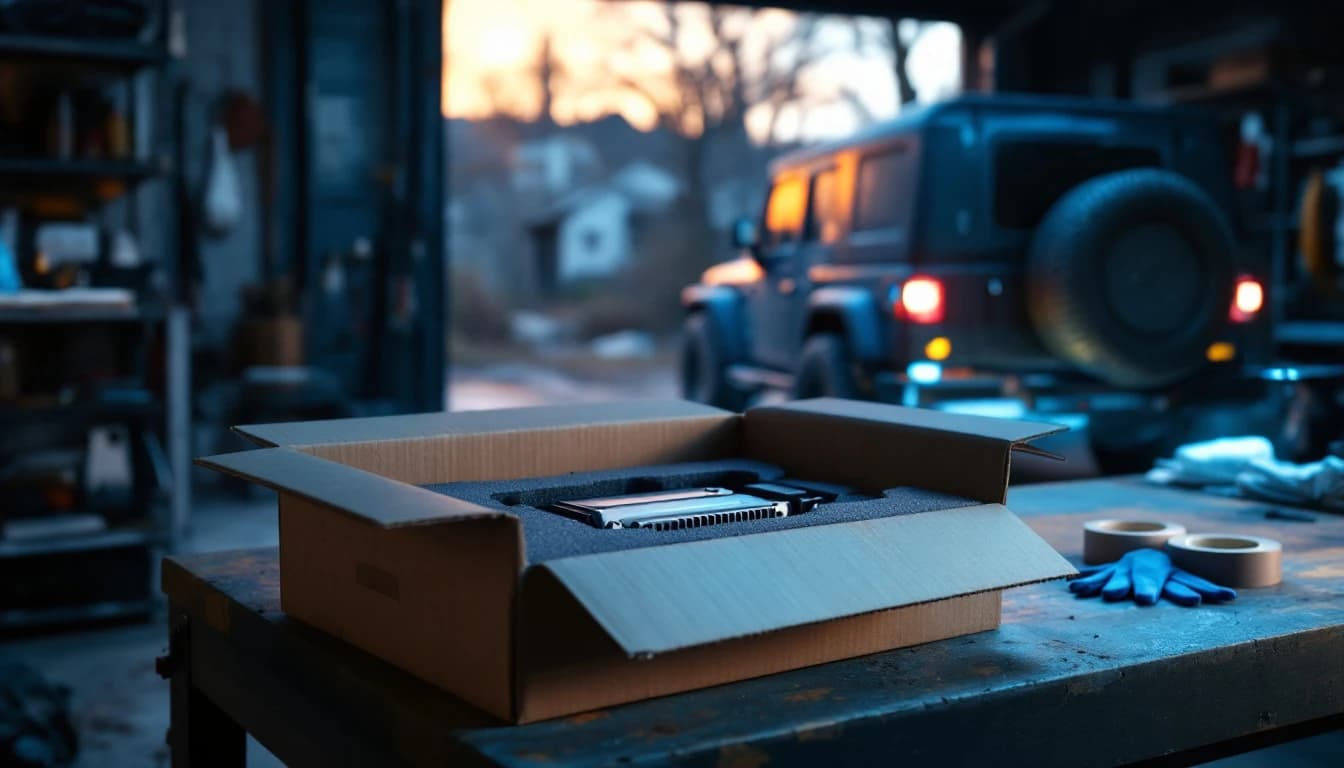
Ship the electronic controller, or the complete unit if yours does not separate, in a padded box with the lines capped and the connector protected. Include the VIN, the year and trim, the full code list from the ABS controller, a photo of the label, and a note on the Jeep's history: water crossings, lifts, tyre size, recent alignment, and whether the pump runs after key-off or the battery has been going flat. Choose a return shipping tier at checkout; the rush option moves the bench time to 2 to 3 business days. We text updates to the number on the order, and the repaired controller goes back with the work documented and its coding untouched.
Frequently asked questions
Why are the ABS, ESP/BAS and traction lights all on at once on my 2015 Wrangler? Because on the JK those functions run on one controller. An internal electronic fault in the ABS module takes anti-lock, stability, brake assist and traction control down together while the hydraulic brakes keep working. A wheel-speed sensor fault usually names a corner, and an ESP/BAS lamp alone after steering work is usually a steering-angle relearn.
What does C2200 mean on a Wrangler JK? C2200 is an ABS control module internal failure: the module's own self-test has found an electronic fault, usually a driver stage or corrupted memory. Nothing outside the unit sets it, clearing it does not help, and it is the code that justifies repairing or replacing the controller.
My JK battery keeps going flat and I can hear something running under the hood. Is that the ABS module? Very often, yes. A stuck pump-motor relay or driver inside the controller keeps the ABS pump running after key-off and drains the battery overnight. It usually stores C2116 and it is an internal electronic failure that repairs on the bench.
Will a lift or 35-inch tyres cause ABS faults on a JK? Not by themselves, because the controller compares the four wheels to each other. Mismatched tyre sizes, a worn corner or a tone ring damaged during an axle or gear change do cause wheel-speed disagreement, and an alignment or lift without a steering-angle sensor relearn can light the ESP/BAS lamp on its own. Neither is a module fault.
Does a repaired JK ABS module need programming? No. The repaired unit is your own original, so its configuration never changed and it goes back in configured. Programming is only required when a different unit is fitted, and on most JKs the brakes do not need bleeding after an electronics-only repair because no hydraulic line was opened.
How much does a Wrangler JK ABS module repair cost? A board-level repair of your own controller is $499 flat plus return shipping chosen at checkout from $29.95, with a 1-year warranty on the repair, about a week on the bench and a rush option for 2 to 3 business days. A dealer assembly with programming and a bleed commonly runs well into four figures.
Should I drive the Jeep with the ABS module dead? Hydraulic braking still works, so it is drivable in the narrow sense, but anti-lock, stability control and brake assist are all off on a tall, short-wheelbase vehicle. Get the controller repaired before the next trail trip or highway run rather than treating the lamps as decoration.
Ready to send yours in? The Wrangler JK ABS module repair page puts the codes, the dealer and Mopar prices, what to ship and the checkout in one place.
The bottom line
The 2014 to 2016 Wrangler JK was the highest-volume Jeep of its generation and is now at the age where its ABS controller fails, with the ABS, ESP/BAS and traction lamps lighting together, the speedometer dropping out and, on the stuck-relay cases, a battery that dies overnight. Read the controller's own codes, check the connector and grounds on any Jeep that sees water, watch the four wheel speeds on a lifted or re-tyred truck, and rule out a steering-angle relearn before blaming the module for an ESP/BAS lamp on its own. When the codes are C2200 or C2116 and everything outside the unit is clean, repair the controller you own for $499 with its coding intact instead of buying and programming a whole hydraulic assembly. Photograph the label, send it with the VIN, and the right path is clear before anything comes off the Jeep.
Ship it for the abs module repair — $499 flat
About 1 Week Bench Time (Rush 2–3 Days Available), return speed your choice at checkout. Prepaid inbound label by email the minute you order.
More from the Lab
Ram 1500, 2500, 3500 ABS Module Failure by Generation
10 min · October 10, 2026
Dodge Charger ABS Module Failure by Generation (2006-2023)
10 min · October 10, 2026

Dodge Challenger ABS Module Failure by Generation, 2008-23
10 min · October 10, 2026
ABS Kicks In at Low Speed? Tone Ring, Sensor or Module
10 min · October 10, 2026