Automotive MCU Families and What They Mean for Bench Reads
Start with the question that decides everything
Before anyone can clone your ECU, transfer an immobilizer relationship, write a VIN, or recover a bricked controller, one plain question has to be answered first: can the memory inside that box be read, and can it be written back? Price, turnaround, and whether the job is possible at all follow from that single answer.
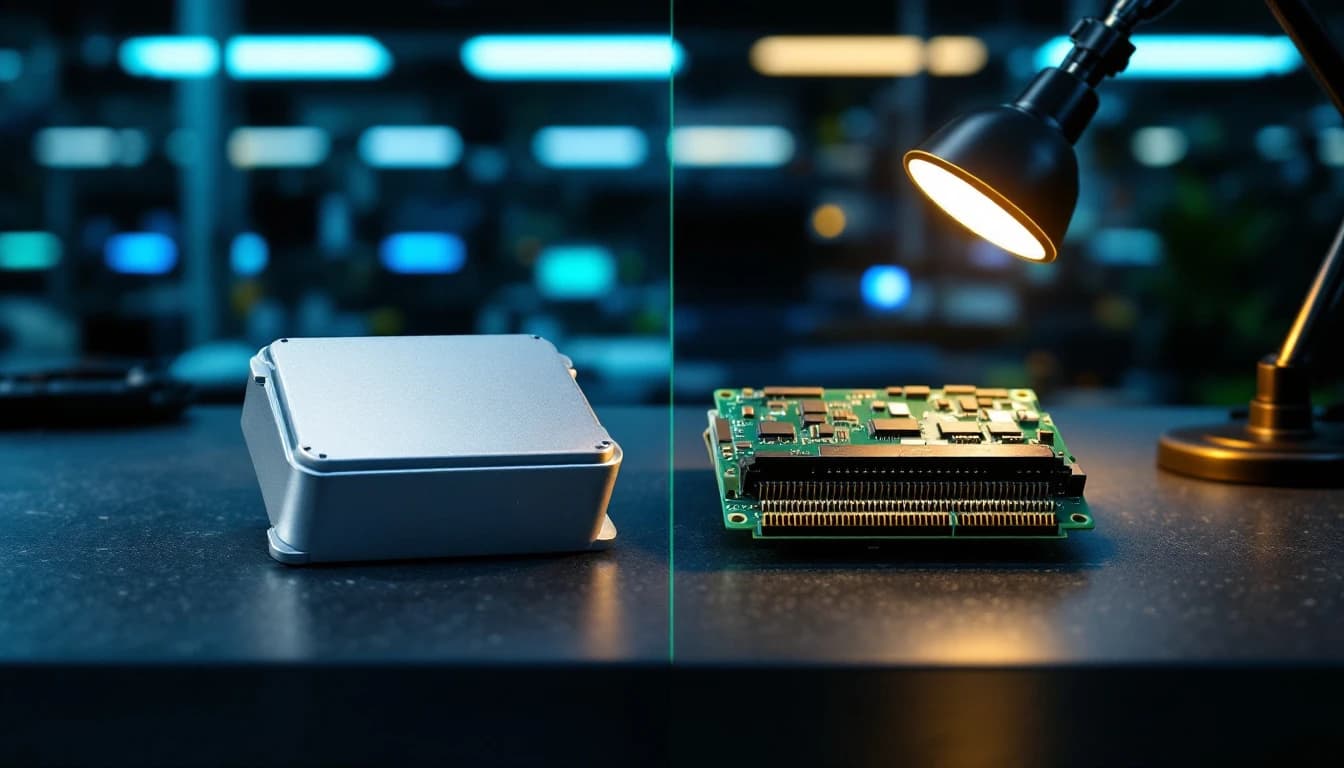
What most people expect is that the answer depends on the car. It does not. It depends on the microcontroller soldered to the board, the security settings burned into that microcontroller at the factory, and the physical access the module designer left available. A 2004 sedan and a 2019 truck can be equally open or equally closed depending on what silicon is inside. That is why the first thing a bench asks for is rarely just year and model — it is a clear photo of the board and the part numbers printed on the main chip and on the small eight-pin device beside it.
This is a hardware and access article. It covers the microcontroller families you actually meet in automotive modules, what each implies for a bench read, and what the four access methods cost you in disassembly, time, and risk. What lives inside a calibration file — its internal structure, its maps and tables — is a different subject entirely and is not covered here.
Why there are so many different chips in one car
A modern vehicle is not one computer. Supplier and semiconductor material routinely describes premium vehicles carrying well over 100 networked electronic control units, and software content on the order of 100 million lines of code across the whole vehicle, a figure NXP and other automotive semiconductor suppliers have used for years to describe the scale of the problem. Those units are built by different suppliers — Bosch, Continental, Denso, Delphi, Siemens, Marelli, Visteon — and each supplier chooses its own microcontroller for its own reasons.
That fragmentation is why bench work is a craft rather than a single procedure. The engine controller, the transmission controller, the body module, and the cluster in one vehicle can easily use four different chip families with four different access routes and four different security models.
It also explains why supply problems hit the industry so hard. The automotive semiconductor shortage that began in 2020 cut global light-vehicle production by several million units over the following two years, a disruption covered extensively by outlets including Car and Driver and Consumer Reports. Modules that once had one sourceable part number ended up with several, which is exactly why part-number verification before shipping is not bureaucracy.
The four ways into a module
Every bench read comes down to one of four routes. Understanding them is most of the battle, because the route determines the disassembly, the price bracket, and the risk.
1. Through the connector, using OBD and UDS
This is the route the dealer tool uses. The module stays in the car or sits on a bench harness, and the tool talks to it using standardized diagnostic services over CAN. The Unified Diagnostic Services protocol standardized as ISO 14229 — the working vocabulary of modern module programming, and a body of work that runs alongside decades of SAE International diagnostic standards — defines the requests: read data, write data, enter a programming session, request a security-access seed, transfer data blocks.
The U.S. Environmental Protection Agency has required OBD-II on all light-duty vehicles sold in the United States since the 1996 model year, which is why every car built in the last thirty years has at least this doorway. It is the cheapest and least invasive route: nothing is opened, nothing is desoldered.
The catch is that this route only gives you what the manufacturer decided to expose. Reading the full flash memory of the controller is usually not one of those things. You can often write a signed calibration file. You almost never get to extract the original one, and you generally cannot see the immobilizer secrets held in protected memory. For a straightforward reflash that is fine. For a clone, an unlock, or a recovery, it usually is not enough.
2. Boot mode
Most automotive microcontrollers include a factory bootstrap loader — a small routine in ROM that runs instead of the normal application when the chip is powered up with a specific pin held at a specific level. Suppliers use it in production. A bench uses it for the same reason: it talks to the silicon rather than to the software the supplier wrote.
Getting there means opening the module. Sometimes it is one solder joint or a single pad bridged to a voltage rail, held while power comes up. Sometimes it is a resistor lifted, a capacitor removed to keep the line clean, or a supply rail isolated so the boot pin actually wins. That is real disassembly on a board that is often conformally coated, and the coating has to come off cleanly and go back on.
Boot mode is the workhorse for the modern Bosch and Continental engine controllers behind services like a VW/Audi Bosch engine-ECU clone at $300 or a Mercedes ME9.7 ECU service at $275. It is also how many locked controllers get opened before anything else is possible.
3. BDM, JTAG, and DAP
These are debug ports — the interfaces chip designers put in so engineers can develop and test firmware. Background Debug Mode is the classic Motorola and Freescale interface, familiar to anyone who has worked on a 9S12 body module. JTAG is the general-purpose boundary-scan and debug standard used across the industry. DAP, the Device Access Port, is what Infineon put on the later TriCore parts.
Access ranges from convenient to invasive. Some modules bring the debug pads out to a neat header the factory used for end-of-line programming. On others the pads are unmarked test points that have to be identified, and on the worst the traces are buried and need pogo pins on tiny vias or fine wires soldered to pads smaller than a grain of rice.
Debug-port access is powerful, because you are talking to the core rather than to an application. It is also where the risk lives: a slipped probe on a live board, or a supply rail shorted for a fraction of a second, can turn a repairable module into scrap. This is why it belongs on a bench with a regulated supply rather than under a dash with a marginal battery.
4. Direct serial EEPROM read
Plenty of the data people actually need does not live in the microcontroller at all. It lives in a small separate memory chip beside it — a 93C46, 93C56, or 93C66 in the Microwire family, a 24C02 through 24C16 on I2C, or a 95-series SPI device. Those are the chips that hold immobilizer data, mileage, configuration bytes, VIN strings, and the counters that matter in cluster and body work.
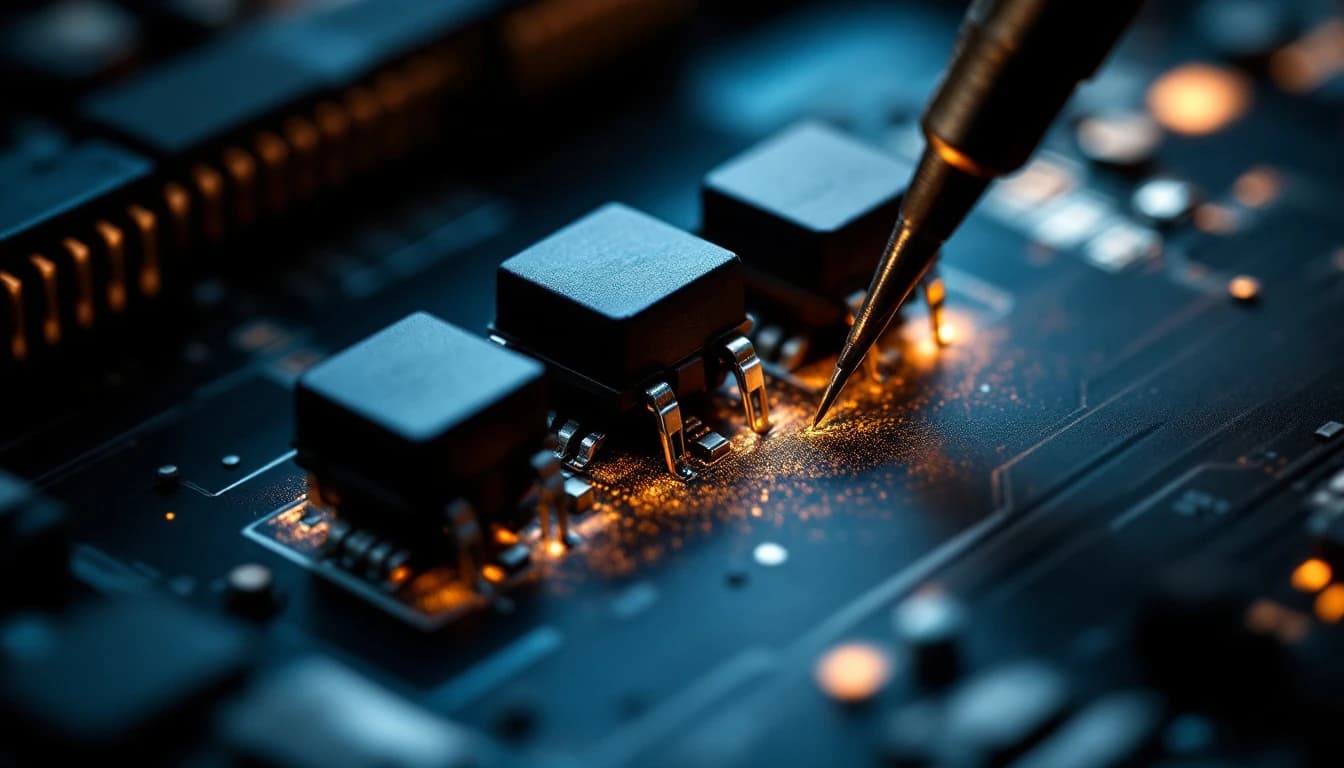
Reading them is either done in-circuit with a clip, which is quick but can fight the rest of the board for control of the bus, or by desoldering the chip, reading it in a socket, and putting it back. Desoldering an eight-pin surface-mount part and returning it to the same pads is routine bench work — but it is still hot-air work on someone else is car, and it is the reason padding and packaging matter when you ship.
This is the route that makes a lot of older work possible. It is also the route behind a great deal of cluster, keyless-entry, and airbag bench service, where the microcontroller itself never has to be touched.
What each route actually costs you
| Access route | Module opened? | Typical effort | Main risk | What you usually get |
|---|---|---|---|---|
| OBD / UDS through the connector | No | Lowest — plug in | Interrupted write on weak power | Write a signed calibration; rarely a full read |
| Boot mode | Yes | Moderate — pads, jumpers, coating removal | Coating damage, wrong pad, unstable supply | Full flash read and write on supported families |
| BDM / JTAG / DAP | Yes | Moderate to high — probes or soldered leads | Slipped probe, shorted rail, scrapped board | Core-level read and write, recovery of bricked units |
| Direct serial EEPROM | Yes | Low to moderate — clip or desolder | Lifted pad, cracked chip, bus contention | Immobilizer data, mileage, VIN, configuration bytes |
There is no universally best route. The right one is whichever the specific chip, the specific security state, and the specific job allow. Most real bench jobs use two: an EEPROM read for identity data and a boot-mode or debug read for the program flash.
The families you will actually meet
Infineon TriCore
TriCore is the family behind most modern European engine management. It has been in automotive powertrain service for well over two decades, and Infineon has carried it forward through several generations into the current AURIX parts. If your module is a Bosch MED17, EDC17, MG1, or MD1, or a Continental unit of similar vintage, you are almost certainly looking at TriCore.
For bench access this means boot mode on the older parts and DAP on the newer ones, and it means security is a first-class feature rather than an afterthought. Later TriCore devices support password-protected debug access and one-time-programmable settings that can permanently close the debug port. Where a supplier has used those features aggressively, no amount of skill opens the door — that is not a tooling gap, it is silicon doing exactly what it was designed to do.
NXP and Freescale MPC5xx, MPC55xx and MPC56xx
The PowerPC-derived MPC5xx parts — MPC555, MPC561, MPC562, MPC563, MPC565 — sit in a large population of late-1990s and 2000s powertrain controllers, and the later MPC55xx and MPC56xx generations carried the architecture into the modern era across engine, transmission, and chassis modules. NXP, which absorbed Freescale, still documents the family.
In practice these are BDM and JTAG parts, and the older ones are relatively cooperative. They are the reason a lot of 2000s-era transmission and engine cloning work is feasible at all: the memory can be read out through the debug port when the censorship word has not been set, and written back the same way.
Renesas
Renesas covers two important streams. The SH-2A cores — SH-7055, SH-7058 and relatives — are the heart of a great many Denso engine controllers, which puts them in a very large number of Japanese vehicles. The newer RH850 family, along with the V850 line Renesas inherited from NEC, appears across newer powertrain and body applications. Renesas publishes the family documentation.
The practical point for a customer is that Denso controllers frequently need boot-mode or debug access rather than an OBD read, and Renesas parts commonly implement an ID-code mechanism that gates the debug interface. Where that code is unknown and the part is configured to refuse, the module is closed.
Infineon C167 and STMicroelectronics ST10
These 16-bit parts are the older European standard. The C167 and its ST10 relatives from STMicroelectronics sit inside Bosch ME7-era engine management and the Siemens controllers of the same period, including the BMW MS4x-family DMEs.
They are, generally speaking, friendly. Boot-mode access is well understood, the flash and the external EEPROM are both reachable, and the immobilizer relationships stored in them are exactly what bench services address. That is precisely why a BMW EWS delete on an MS41, MS42, MS43, or an MSS unit is a routine $250 bench job rather than a research project, and why the same era of hardware makes BMW EWS key programming approachable. Older silicon with simpler protection is the single biggest reason bench work on these cars stays affordable.
The 68HC family and separate serial EEPROMs
Motorola and later Freescale 68HC08, 68HC11, 68HC12, and 9S12 parts are everywhere outside the engine bay: body control modules, clusters, immobilizer boxes, keyless-entry receivers, and airbag controllers. They are BDM parts, and BDM on a 9S12 is one of the most established access methods in the trade.
Just as often, though, the microcontroller is not the target. The data sits in the little serial EEPROM next to it, and the job is a clip or a desolder rather than a debug session. A great deal of cluster, keyless-entry, and body work lives entirely at that level.
Read protection, and why some modules are one-way
Every family above includes some way for the manufacturer to close the door behind itself. The names differ — censorship, read-out protection, debug password, ID code, lifecycle state, one-time-programmable fuse — but the effect is the same: the chip refuses to hand back its contents.
Two things about read protection surprise people.
The first is that protection is often asymmetric. A module can accept a properly signed calibration written through the front door while flatly refusing to let anyone read the original out. That is why a shop can reflash a controller it can never clone. If you have been told your module can be programmed but not copied, that is not a contradiction — it is the ordinary state of a modern controller.
The second is that some protection is permanent by design. A one-time-programmable fuse is exactly what it sounds like. Once set, the debug port is closed for the life of the silicon. No tool opens it, no lab opens it, and anyone who says otherwise is describing a different chip.
Layered on top of the hardware is the software gate: the seed-and-key security-access exchange a module demands before it will accept a programming session. That mechanism is a separate topic in its own right, and it is worth reading about module security access and PIN or CS code reading if that is where your job has stalled.
"The families people think are hard are usually the ones nobody has bothered to look at properly. The genuinely hard ones are boring: the fuse is blown, the port is dead, and you can flash it forever without ever getting a byte back out. I would rather tell a customer that on day one than take his money and discover it on day three." — Independent European bench technician, 18+ years in module-level ECU work, anonymized
Locked controllers have to be unlocked before anything else
Some controllers ship deliberately locked against third-party read and write, and every downstream job stalls until that is dealt with. The clearest example in the American market is the Chrysler, Dodge, Jeep, and Ram GPEC family, where factory security restrictions stop tuning software from reading or writing the calibration at all. That is why GPEC PCM unlocking is a $250 service in its own right rather than a step folded into something else — it is genuinely the first move, not part of a later one.
The same logic applies to used donor modules that still belong, cryptographically, to another vehicle. A used GM engine controller that has not been returned to a neutral state will refuse to behave, which is what a GM Global A virginize at $150 addresses. Order matters: unlock or neutralize first, then clone, VIN-write, or configure.
If you are trying to work out where a specific job lands on the effort scale, our module and ECU programming cost guide walks through why identical-looking work is priced so differently across platforms. The access route is usually the reason.
What "we could not read it" actually means
When a bench says a module could not be read, it almost always means one of six specific things — and a good lab will tell you which.
The security fuse is set. The debug port is permanently closed. Nothing gets it back.
The password or ID code is unknown. The port exists and answers, but it will not open without a value nobody outside the supplier holds.
The part is not supported by any available tooling. The silicon is readable in principle, but no current platform implements that specific device and family combination.
The chip is physically damaged. Water intrusion, a jump-start overvoltage event, or heat has taken the die or its supply circuitry beyond recovery. Read attempts fail because the part is not alive in the way it needs to be.
The board will not come up cleanly. A failed regulator or a cracked joint means the microcontroller never reaches a stable state to talk from. Sometimes that is repairable first, and then the read succeeds.
A previous attempt left it half-written. Someone started a flash that did not finish. The module is bricked rather than locked, which is a different and often better problem, because a debug port can frequently write a full image back.
Those are very different outcomes with very different next steps, which is exactly why a diagnosis is worth paying for when the answer is unclear. A bench evaluation is $150, the fee is credited toward the repair if you go ahead, and it ends with a written answer and a photo of the board rather than a guess.
What to send us before you ship anything
For any job where read access is the question, four things let us answer before a box moves:
- A clear, in-focus photo of the module label with the full part number and supplier number
- A photo of the board with the main microcontroller visible, close enough to read the markings
- The VIN, and the year, make, model, and engine
- A plain description of what has already been attempted, including any failed programming session
That last one matters more than people expect. Knowing that a module has already had an interrupted flash changes the plan entirely, and hiding it only costs time.
Any work touching keys, immobilizer data, or security access also requires proof of ownership. That is not negotiable, and it applies to shops and locksmiths as well as vehicle owners. Immobilizer removal is handled as a legitimate repair, off-road, or orphaned-platform matter only, with ownership documented.
When you do ship, send USPS to PO Box 120241, Arlington, TX 76012, or use 1009 Oakwood Ln # 120241, Arlington, TX 76012 for UPS and FedEx, which cannot deliver to a PO Box. Work is performed at our Arlington bench, and return shipping starts at $29.95, chosen at checkout.
Frequently asked questions
Can you tell from my VIN whether my module can be read?
Usually yes, but not always with certainty. The VIN narrows the likely supplier and controller family down to a short list, which is enough to quote most jobs. Where a platform used more than one supplier in the same model year, or where a controller was revised mid-production, we ask for a photo of the module label and the board before committing to an answer.
What is the difference between a module being locked and a module being bricked?
A locked module works perfectly but refuses to give up its contents, because a security fuse, password, or factory restriction is blocking access. A bricked module does not work at all, usually because a programming session was interrupted partway through. Bricked is often the more recoverable of the two, since a debug port can frequently write a complete image back.
Why can a shop flash my ECU but not clone it?
Because writing and reading are separately controlled. Manufacturers expose a signed calibration write through the normal diagnostic interface for service purposes, while blocking any read that would let the original file leave the module. That asymmetry is deliberate and is the single most common source of confusion in this trade.
Does removing the module from the car damage anything?
Not if it is done sensibly. Disconnect the battery, let the vehicle sit for several minutes before unplugging connectors, release the connector locks rather than pulling on the harness, and put the module in an anti-static bag inside a padded box. The most common shipping damage we see is a cracked connector housing from an under-padded box, not anything that happened during removal.
Is a bench read safer than doing it in the car?
Yes, for the work that needs it. A bench read runs on a regulated power supply that cannot sag, on a board that is visible and accessible, with the ability to stop and reassess at any point. An in-vehicle attempt on a marginal battery is the classic way a healthy controller ends up bricked mid-flash.
My module has a security fuse set. Is there really nothing that can be done?
For reading that specific silicon, correct — a blown one-time-programmable fuse is permanent. The practical path forward is different: source a compatible donor module, transfer whatever identity data lives in the separate EEPROM if it is intact, and program the donor to your vehicle. That is a real solution, and it is what most locked-module jobs turn into.
Do you need the whole car, or just the module?
Just the module, for everything described here. We are a mail-in bench operation serving customers nationwide — you remove the module, ship it, and reinstall it when it comes back. Some jobs also need a second item, such as a working key or a matched module, and we tell you exactly what to include before you pack the box.
The bottom line
Whether your module can be read is a hardware question, not a brand question. Infineon TriCore, NXP and Freescale MPC5xx and MPC55xx/56xx, Renesas SH and RH850, the older C167 and ST10 16-bit parts, and the 68HC family with their companion serial EEPROMs each set their own terms, and those terms decide which of the four routes — OBD and UDS, boot mode, BDM or JTAG or DAP, or a direct EEPROM read — is available to you.
Older silicon with light protection is why some jobs are routine flat-rate bench work. Modern silicon with a closed debug port is why some jobs are impossible no matter who you ask, and why an honest lab will tell you so before it takes your money. Everything in between is a judgment call that starts with a clear photo of the board.
If you are not sure where your module lands, send the label photo, a board photo, and the VIN before you ship anything. If the answer is not obvious from those, a bench evaluation at $150 turns the question into a written answer, credited toward the work if you proceed. Text us and we will tell you which of the four doors your module has — or that it does not have one.
Ship your module today
Flat-rate pricing, typical 24-hour bench turnaround, return speed your choice at checkout. Most jobs back on your bench within a week.