
Kelsey-Hayes 325 ABS Module Repair (EBCM) — Silverado, Sierra, Tahoe, Suburban, Dodge Ram
ABS and brake lights on with C0265 stored on a GM truck? The Kelsey-Hayes 325 EBCM is the classic cause — we repair the module at board level and send your original back.
Sending several modules? Add them all — one box, one return-shipping charge.
Kelsey-Hayes 325 (KH325) EBCM — full-size Chevrolet / GMC / Cadillac trucks and SUVs, roughly 1999-2006, plus Dodge and Ford trucks that carry one. Confirm by module label.
Kelsey-Hayes 325 ABS Repair: the short answer
Kelsey-Hayes 325 ABS repair is a mail-in, board-level repair of the KH325 electronic brake control module fitted to GM full-size trucks and SUVs — Chevrolet Silverado, Tahoe, Suburban and Avalanche, GMC Sierra, Yukon and Yukon XL, and Cadillac Escalade — of roughly the 1999-2006 period. It addresses ABS and brake warning lights with C0265 stored, EBCM relay and pump-motor circuit faults, and unwanted or absent ABS pump operation. Auto Module Lab repairs your original module at our Arlington, Texas bench for $325 flat, typically in about a week on the bench, with a 2–3 business day rush option. Dodge and Ford trucks that carry one qualify too, by label.
How It Works
Three simple steps. Hundreds of mail-in jobs completed for shops, locksmiths, and DIY pros.
Pay & Get Address
Click "Order Now", pay securely online. We email shipping address + instructions within minutes.
Ship Your Module
Pack per the instructions and ship to Arlington. USPS goes to our PO Box; UPS and FedEx must use the street address. Your prepaid inbound label arrives by email — shipping to us costs you nothing.
Get It Back
The repair takes about a week on the bench (2–3 business days with rush repair) after your module arrives. Ships back at the return speed you chose at checkout — standard to overnight. Tracking emailed.
What You Get
- Your original KH325 EBCM opened, inspected and bench-tested
- Board-level repair of the relay and driver section and its solder joints
- Your module returned — no programming or bleeding differences from a swap
- Outputs and communication verified before it ships back
- Thermal cycling for intermittent faults that only appear warm
- An honest assessment first if the board cannot be economically recovered
- 1-year warranty on the repair — extend to 2 years (+$50), 3 years (+$100) or 5 years (+$150) at checkout
- About 1 week on the bench — or add rush repair (+$100) for 2–3 business days
Compatibility
Confirm your part matches one of the variants below before ordering. Not sure? Text us a photo and we'll verify.
The KH325 is identified by the module itself rather than by year alone, because GM used more than one ABS system across this era of truck, and Dodge and Ford fitted it to some trucks and not others. Text us a photo of the module and its label together with your VIN and we confirm you have a Kelsey-Hayes 325 before you remove or ship anything — free, and it saves the most common wasted trip on this platform.
Vehicles
Also, confirmed by label
- Dodge Ram, Dakota and Durango with four-wheel ABS (late 1990s to mid-2000s)
- Ford and Lincoln trucks and SUVs that carry a Kelsey-Hayes 325
- GM midsize trucks and SUVs that carry a Kelsey-Hayes 325
System
What we repair
Not this service
- Wheel speed sensors and hubs
- ABS pump / hydraulic unit mechanical failure
- Rear-wheel-only ABS modules and other ABS systems — see our universal ABS service
Will This Fix My Problem?
Honest answer: here's exactly what this service fixes — and what it doesn't.
Fixes:
- ABS and brake warning lights on with C0265 stored
- EBCM relay circuit faults traced inside the module
- ABS pump running when it should not, or not running when it should
- Loss of communication with the EBCM where power and grounds check out
- Intermittent ABS faults that appear once the module is warm
- Warning lights that return within minutes of being cleared
Won't fix:
- Failed wheel speed sensors and hub bearing assemblies — a very common cause of ABS lights on these trucks and not a module fault
- Mechanical failure of the ABS pump or hydraulic unit
- Air in the brake system, low fluid, or a failed master cylinder
- Wiring, connector and ground faults between the module and the sensors
- Worn pads, rotors and normal brake service items
- A board damaged beyond economical repair — assessed and reported before any charge
Before you order
You diagnose, we service the module.
We don't have your car and we don't diagnose it. Order once you or your mechanic have confirmed this module is the cause. If the work is completed and the car still has the same symptom because of another fault, the work is still done — a bench re-test under warranty is free.
A clone copies what is in your module.
We transfer the data as we read it. If another shop or tool already worked on the module — an unfinished clone, a tune, a delete — that data can come across too. Tell us before you ship.
What "plug-and-play" means.
No dealer programming should be needed when your original data is intact, the donor matches your module (same type, hardware and software family) and the rest of the car works. It isn't a promise that the car will start or run.
What we repair on this module
Board-level faults, not symptoms. These are the specific failures our bench process targets.
Codes that commonly lead here
What each code means, and what it does not prove on its own.
A stored code is evidence, not a verdict. Every code below can also be set by wiring, connectors, grounds, power supply, or the component the module is trying to drive. Rule those out before you ship anything — or text us the codes and freeze-frame and we will tell you honestly whether the module is even a suspect.
| Code | Meaning | What it does not prove |
|---|---|---|
| C0265 | EBCM relay circuit — the classic Kelsey-Hayes 325 fault. | The best single indicator of an internal module fault on this platform, but not proof on its own. Confirm the module has clean power and a good ground, and check the connector for corrosion, before condemning it. |
| C0267 | Pump motor circuit fault. | Can be the driver circuitry inside the module or the pump motor itself. If the pump is seized or drawing abnormally, the module is the victim rather than the cause. |
| C0221-C0235 | Wheel speed sensor circuit faults, individual wheels. | These point AWAY from the module. A single-wheel code is almost always that sensor, its wiring, or the hub bearing assembly it lives in — a very common failure on these trucks and not something a module repair fixes. |
| U0121 | Lost communication with the ABS control module. | Set by harness damage, corroded connectors, poor grounds or loss of module power as readily as by a failed module. Prove power and bus integrity at the module first. |
EBCM relay circuit — the classic Kelsey-Hayes 325 fault.
Does not prove: The best single indicator of an internal module fault on this platform, but not proof on its own. Confirm the module has clean power and a good ground, and check the connector for corrosion, before condemning it.
Pump motor circuit fault.
Does not prove: Can be the driver circuitry inside the module or the pump motor itself. If the pump is seized or drawing abnormally, the module is the victim rather than the cause.
Wheel speed sensor circuit faults, individual wheels.
Does not prove: These point AWAY from the module. A single-wheel code is almost always that sensor, its wiring, or the hub bearing assembly it lives in — a very common failure on these trucks and not something a module repair fixes.
Lost communication with the ABS control module.
Does not prove: Set by harness damage, corroded connectors, poor grounds or loss of module power as readily as by a failed module. Prove power and bus integrity at the module first.
Our bench process
What happens between your module arriving and it going back in the box.
- 1
Intake and visual inspection
Intake and visual inspection
The module is logged against your order, photographed as received, and opened. We look for what decides whether repair is sensible at all: liquid ingress, corrosion, prior repair attempts, physical damage, and burnt or lifted components.
- 2
Power-up and communication test
Power-up and communication test
The module is powered on a bench harness to establish whether it comes up and communicates. A silent module and a module that talks but misbehaves are different faults with different causes, and this separates them before any rework starts.
- 3
Fault localisation under load
Fault localisation under load
We test the sections that actually fail on this module — supply rails, output stages, and the circuits feeding them — with the module doing work rather than idling. Intermittent faults get thermal cycling, because a joint that measures fine cold is precisely the joint that opens hot.
- 4
Component-level repair
Component-level repair
Failed components are replaced and weak or cracked joints reworked, on the board you sent us. If a fault traces to damage beyond economical repair, work stops here and you hear about it before anything is charged.
- 5
Data preservation
Data preservation
Where the repair touches memory or needs a programming step, your existing configuration is read first and restored afterwards, so the module returns set up for your vehicle rather than blank.
- 6
Bench verification and return
Bench verification and return
The repaired module is retested — including the specific function that failed — thermally cycled again, then packed with protection and shipped back with tracking at the return speed you chose.
Why repair your original?
The case for keeping the module that is already married to your vehicle.
Nothing changes for the rest of the truck
Your repaired module goes back into the same hydraulic unit it came off, configured as it was. There is no donor module to match, no configuration to transfer, and no new variable introduced into a brake system — which is not a system where anyone should be adding unknowns.
A used EBCM is a twenty-year-old EBCM
The realistic alternative is a module of the same age and the same accumulated thermal cycles out of another truck that has been sitting in a yard. This is a well-known failure with a well-known cause, and a donor unit is just as far along the same path.
The fault is a repairable section, not the whole module
On the KH325 the failure sits in a specific area of the board. Repairing that area addresses the actual cause. Replacing the entire module — or worse, the whole hydraulic assembly — to solve it is a great deal of money for a small electronic fault.
We check the diagnosis before we take your money
Wheel speed sensors and hub bearings cause an enormous share of ABS lights on these trucks, and they are not module faults. We would rather read your codes and tell you to change a hub than repair a module you did not need repaired.
Repair vs used vs replacement
Four ways out of this failure, compared honestly.
| Path | What you actually pay for | Programming needed | Your data & config | Main risk |
|---|---|---|---|---|
| Repair your original (this service) | Bench diagnosis and board-level repair of the module you already own, at one flat price. | Usually none — it is still your module, still matched to your vehicle. | Retained. VIN, coding and learned values stay put. | A board damaged beyond economical repair. Assessed and reported before you are charged. |
| Used / salvage module | A cheaper part up front, plus whatever it takes to make it work with your car. | Usually yes — a donor module carries another VIN and configuration. | Lost. You inherit the donor vehicle's setup. | An unknown module of the same age and mileage, capable of failing the same way. |
| Remanufactured unit | A rebuilt exchange unit, typically with a core charge against your original. | Usually yes, depending on how it was prepared. | Depends on the supplier — ask before buying. | Quality varies between remanufacturers, and your original is gone once the core ships. |
| New module through a dealer | A new part plus dealer programming labour, and a tow if the car is not driveable. | Yes — dealer setup and coding to your VIN. | Configured fresh to your VIN by the dealer. | Highest-cost path, and dealer scheduling controls your downtime. |
- What you actually pay for
- Bench diagnosis and board-level repair of the module you already own, at one flat price.
- Programming needed
- Usually none — it is still your module, still matched to your vehicle.
- Your data & config
- Retained. VIN, coding and learned values stay put.
- Main risk
- A board damaged beyond economical repair. Assessed and reported before you are charged.
- What you actually pay for
- A cheaper part up front, plus whatever it takes to make it work with your car.
- Programming needed
- Usually yes — a donor module carries another VIN and configuration.
- Your data & config
- Lost. You inherit the donor vehicle's setup.
- Main risk
- An unknown module of the same age and mileage, capable of failing the same way.
- What you actually pay for
- A rebuilt exchange unit, typically with a core charge against your original.
- Programming needed
- Usually yes, depending on how it was prepared.
- Your data & config
- Depends on the supplier — ask before buying.
- Main risk
- Quality varies between remanufacturers, and your original is gone once the core ships.
- What you actually pay for
- A new part plus dealer programming labour, and a tow if the car is not driveable.
- Programming needed
- Yes — dealer setup and coding to your VIN.
- Your data & config
- Configured fresh to your VIN by the dealer.
- Main risk
- Highest-cost path, and dealer scheduling controls your downtime.
No dealer or reman dollar figures are published here on purpose — they move constantly and vary by region, and an invented number would be worse than none. Get a current quote from your dealer and compare it against the flat price above.
C0265 versus a wheel speed sensor — get this right first
Two very different problems put the same two lights on the dash. C0265 is an internal EBCM fault and is the one this service repairs. A wheel-speed-sensor code — the C022x range — is almost always the sensor, its wiring, or the hub bearing assembly it is built into, and hub failure is extremely common on these trucks at this age. Repairing the module will not fix a bad hub, and replacing a hub will not fix C0265. Pull the full code list before you touch anything: if you have a single-wheel sensor code, start there. If you have C0265 with clean power and ground at the module, this is your service. Not sure? Text us the codes and we will tell you which one you are looking at.
Different vehicle? See our universal ABS serviceShipping Instructions
These details are also emailed to you the moment your payment clears.
Ship the EBCM only — the electronic module that separates from the hydraulic unit, not the whole pump assembly. If you are unsure how it separates, text us first and we will walk you through it. Include your full code list. Return shipping is selected and paid at checkout — Standard $29.95, UPS 2-Day $54.95, or UPS overnight $94.95. Ship to PO Box 120241, Arlington TX 76012 (USPS) or 1009 Oakwood Ln # 120241, Arlington TX 76012 (UPS/FedEx).
What to include in your box
- Your Kelsey-Hayes 325 EBCM (the electronic module, not the hydraulic pump assembly)
- Your full stored code list — all of it, including any wheel-speed codes
- A note on whether the ABS pump runs, and whether the fault is hot, cold or constant
- Your VIN and model year
- A printed order confirmation
- Your name, return address, and a phone number we can text
Ship to
Auto Module Lab
If shipping USPS
PO Box 120241
Arlington, TX 76012
If shipping UPS or FedEx
1009 Oakwood Ln # 120241
Arlington, TX 76012
Your prepaid inbound label (already addressed) arrives by email the moment you order; the return label is bought when your module reaches the bench and ships on the speed you chose at checkout.
Need to perform this job remotely?
Get an Auto Module Lab Remote Programming Kit and have our technicians program supported vehicles from your shop — the car stays on your lift and nothing gets posted.
Buy the interface once — program with us anytime. Supported procedures vary by vehicle, module, OEM software and security requirements.
Frequently Asked
Still have a question? Text us — replies in minutes.
Is C0265 always the module?
My ABS light is on but the code is for a wheel speed sensor. Do I need this?
Do I ship the whole ABS pump assembly?
Will the brakes need bleeding afterwards?
Does the repaired module need programming?
How do I know I actually have a Kelsey-Hayes 325?
Do you repair the Kelsey-Hayes 325 on Dodge and Ford trucks?
The ABS pump runs when I start the truck and will not stop. Is that this fault?
How long does the repair take?
What if the module tests good?
Is there a warranty?
This is a brake system. Should I be doing this myself?
Where is the work carried out?
Related Services
Other bench services for the same brand or use case.
GM Cluster Upgrade + Mileage Program
Dead gauges, dim display, or want the higher-trim cluster? We upgrade and program your GM instrument cluster with the mileage and VIN carried over correctly.
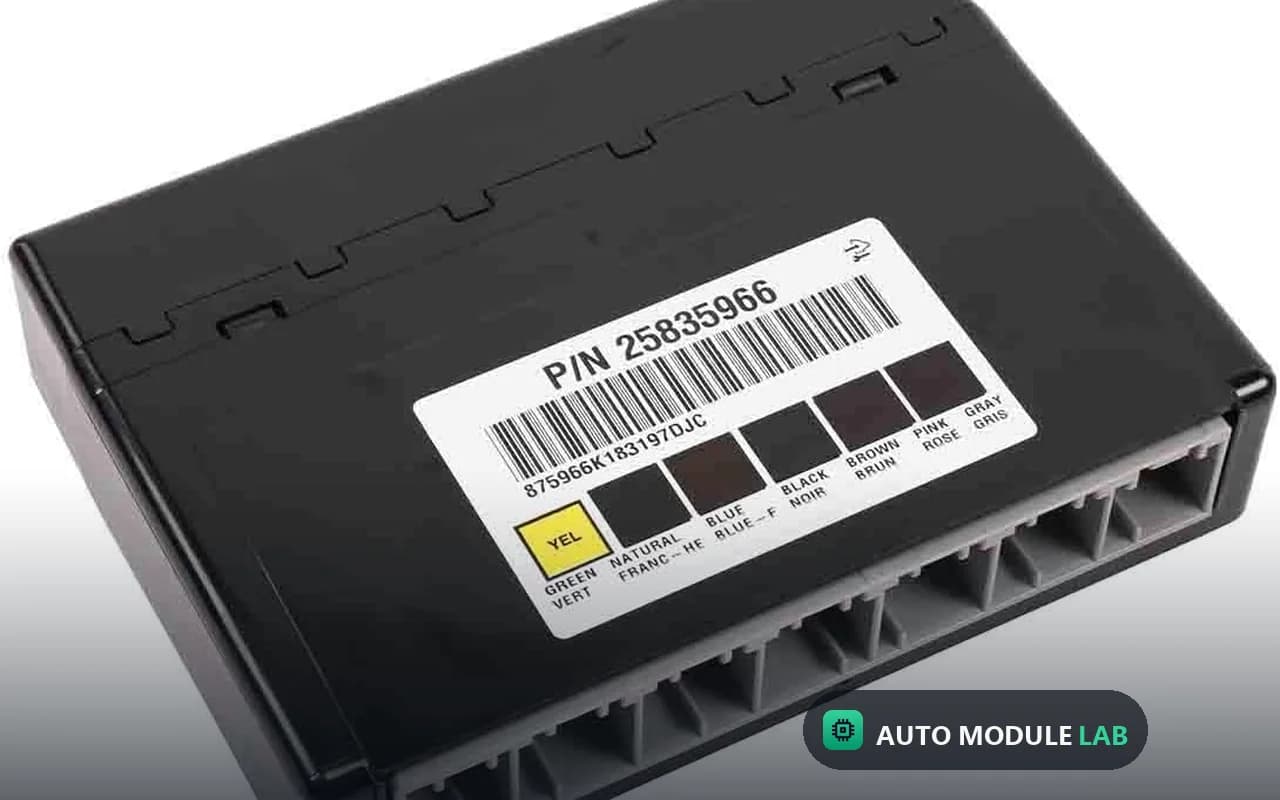
GM BCM Standalone Clone (2000-2023)
Failed GM BCM taking your lights, locks, and anti-theft with it? We clone a working BCM to a replacement — VIN, mileage, theft system and all coding preserved.
GM Global A Virginize (Used ECM)
Used Global A ECM that SPS refuses to program? We reset it to a virgin, unmarried state so GM SPS / TIS2Web will take it to your VIN.
Fault codes this service fixes
Seeing one of these on your scan tool? Here's what it means and how the bench fix clears it.
Where we serve Kelsey-Hayes 325 ABS Repair
Mail-in means nationwide — we accept modules from all 50 states and DC from our Arlington, Texas lab. These states have their own shipping-and-transit page for this service:
12 state guides
Common year + make + model combos
Ready to ship?
$325 flat, about 1 week bench time (rush 2–3 days available). Pay now, get the shipping address by email, drop it in the mail. Your module is typically back on your bench in about two weeks.