Volvo Module Cloning Cost: CEM, REM, ECU, CCM (2026)
The short answer
As of September 2026, cloning a Volvo module by mail-in costs 250 dollars flat per module at Auto Module Lab: the CEM (Central Electronic Module), the REM (Rear Electronic Module), the Denso or Bosch ME9.0 engine ECU, and the CCM (Climate Control Module) are all the same bench price. You add one return shipping tier per order, from 29.95 dollars, and you supply a part-number-matched donor. The donor, not the bench fee, is where totals usually drift.
That is the whole number for most people. The rest of this guide explains why the price is flat, what the 250 dollars does and does not include, how the P2 and P3 platforms change the job, and the handful of variables that genuinely change what you spend.
Why Volvo modules have to be cloned at all
A Volvo is not a collection of independent parts that happen to share wires. The body, engine and comfort modules talk to one another over a CAN network defined by ISO 11898, and classic CAN of the kind these cars use runs at data rates up to 1 Mbit/s. Every module on that network expects the others to be the ones it was built with. Identity, configuration and, for some modules, security data are stored inside each one.
That design is why a used part from a salvage yard so rarely "just works." Pull a CEM out of a donor car and it still carries the donor's VIN, the donor's key data and the donor's configuration. Pull an engine ECU and it still carries an immobilizer relationship with a CEM that is sitting in someone else's car. The part is electrically healthy and logically wrong.
Cloning fixes the logical part. We read the original module on the bench, verify the read, and write its data onto the donor, so the donor behaves like the module that left your car. The factory immobilizer stays active; none of this is an immobilizer delete. If you want the longer technical explanation of why a plug-in swap fails, our guide on why used ECUs fail without cloning walks through it step by step.
The price table
Every figure in this table comes straight from the live service pages. Nothing is estimated.
| Module | Service | Bench price | Platforms covered | Donor you supply | Proof of ownership |
|---|---|---|---|---|---|
| CEM (body computer, VIN, immobilizer, keys) | Volvo CEM clone | $250 flat | P1 2004-2013, early P2 1999-2004, late P2 2005-2014, P3 2007-2016 | Yes, platform and part-number matched | Required for any key or immobilizer work |
| CEM key add, all-keys-lost or clone | Volvo CEM key programming and clone | $250 flat | P2 and P3 CEM-based immobilizer | Only if cloning | Required |
| REM (rear lighting, fuel-pump control) | Volvo REM clone | $250 flat | P3 S60, S80, V70, XC70, XC60, XC90, about 2007-2016 | Yes, part-number matched | Verified by VIN and label first |
| Engine ECU, Denso or Bosch ME9.0 | Volvo engine ECU clone | $250 flat | Denso 279700-xxxx family; Bosch ME9.0 on P1 S40, V50, C30, C70 | Yes, same part number and same supplier | Required |
| CCM (climate control) | Volvo CCM climate module clone | $250 flat | P2 1999-2014 and P1 2004-2013 | Yes, part-number matched | Not required (comfort module) |
| Return shipping, one per order | Chosen at checkout | $29.95 standard, $54.95 UPS 2-day, $94.95 overnight | All of the above | Not applicable | Not applicable |
Two notes on reading it. First, a cart is one physical shipment, so if you send a CEM and a REM from the same car together you pay each module's service price but only one return shipping tier. Second, return shipping is always paid by you and chosen at checkout; it is never bundled into the 250 dollars.
What the 250 dollars includes
For every module in the table, the bench fee covers the same core work:
- A bench read of your original and a separate read of the donor before anything is written
- Verification of both reads, so a bad read never becomes a bad write
- The write of your identity, configuration and coding onto the donor, plus immobilizer and key data where the module holds them
- A communication test on a stable, regulated bench power supply before anything goes back in the box
- Written install notes, including anything that still has to happen at the car
After purchase, the lab emails you a prepaid inbound label. You ship to PO Box 120241, Arlington, TX 76012 if you use USPS, or to 1009 Oakwood Ln # 120241, Arlington, TX 76012 if you use UPS or FedEx, because couriers cannot deliver to a PO Box. The work itself is done at our workshop at 1168 W Pioneer Parkway in Arlington, but that is not a shipping address, so do not put it on the box.
What the 250 dollars does not include
Being clear about this up front saves arguments later.
- The donor module. You source it. We verify the part number against your original's label before you buy, which costs you nothing.
- Return shipping. One tier per order, paid at checkout, from 29.95 dollars.
- Harness, connector and ground repair in the car. If water rotted the connector or the rear harness, a cloned module will fail the same way.
- Remote lock and unlock buttons on a new Volvo key. Mail-in CEM work programs the start function, a transponder or valet key that starts the car. Programming the remote buttons is an on-car procedure through the diagnostic port.
- Unreadable originals. If the original will not power up or respond at all there is nothing to read, so a clone is not possible. That becomes a different job under our advanced recovery service.
- Mechanical faults. A failed fuel pump, a dead blower motor, or a no-start caused by fuel, spark, battery or starter is not a module problem.
The CEM: the module that decides the price on most Volvo jobs
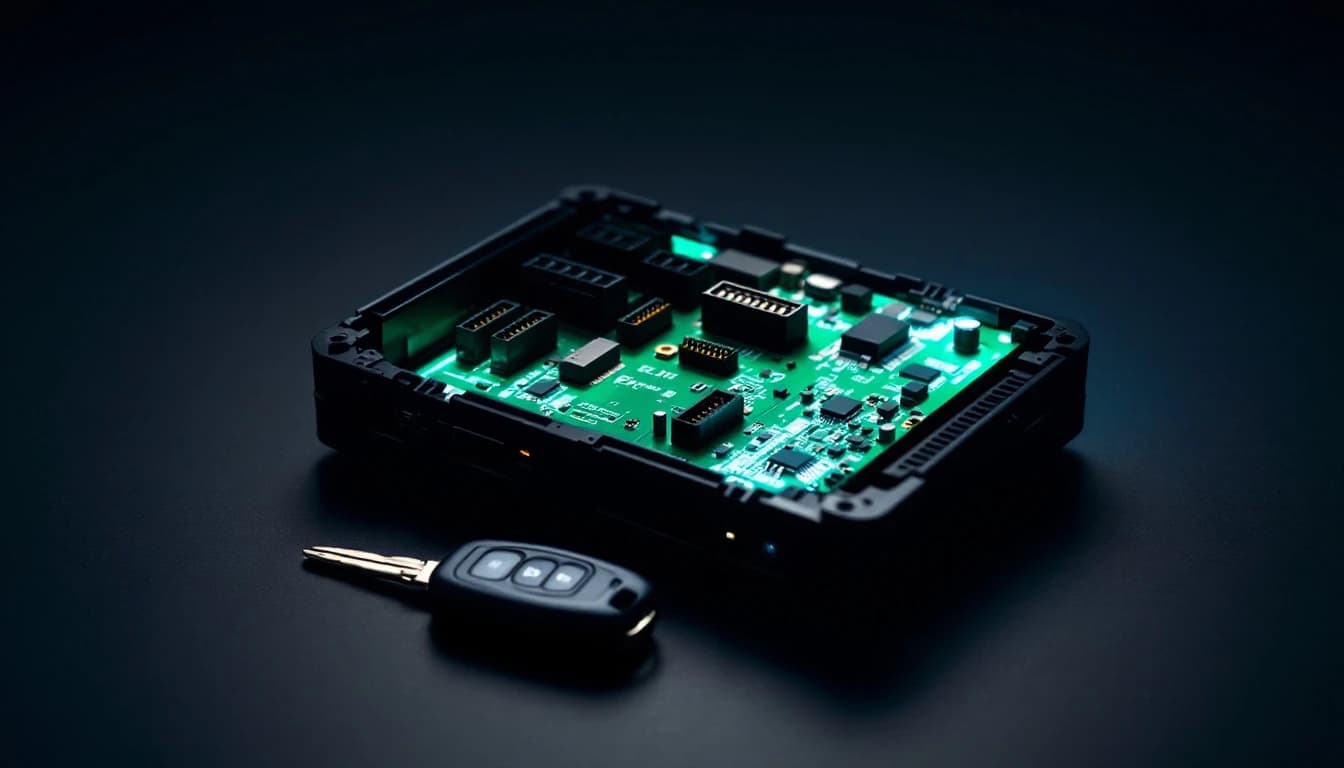
The CEM is Volvo's central body computer. It holds the VIN, the immobilizer and drive-authorization data, the stored key data and the vehicle configuration, and it gateways communication between modules. When it fails, the car can go no-start, drop communication entirely, or stop recognizing the key.
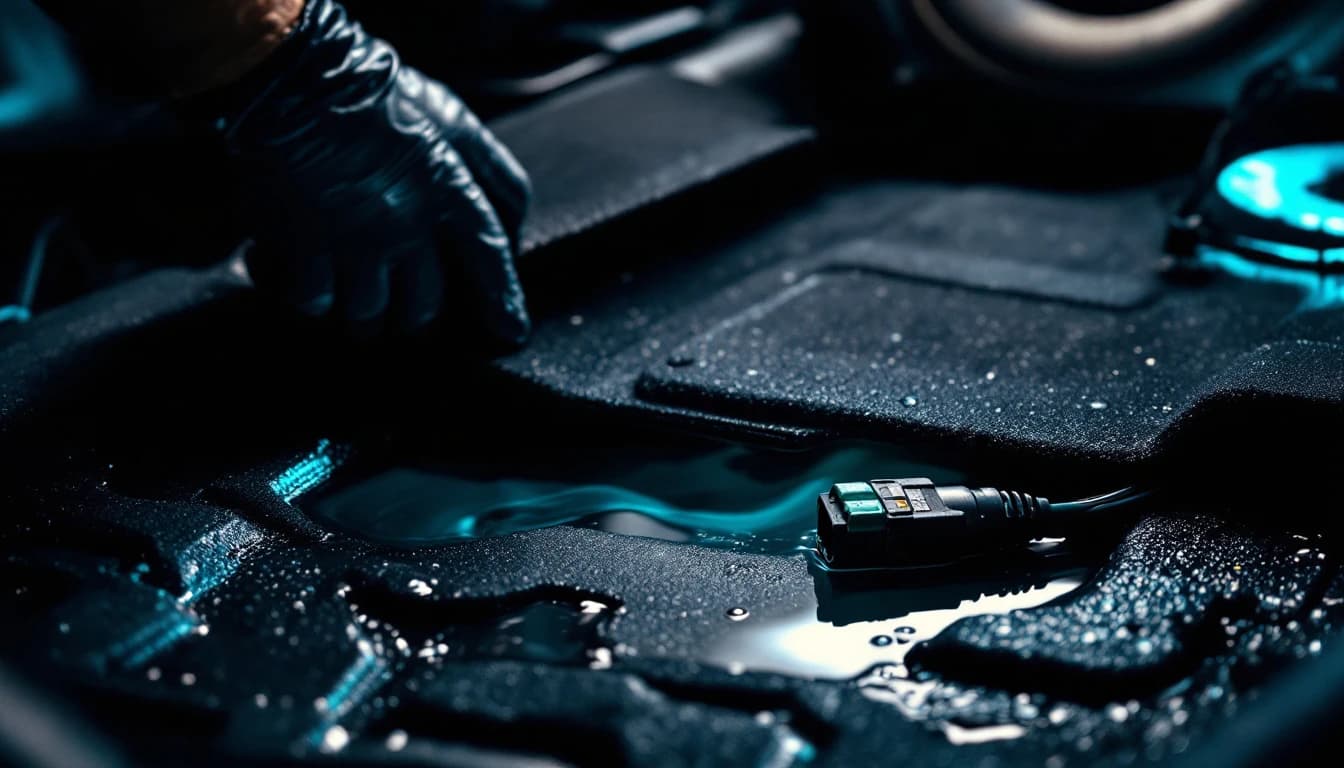
The classic killer is water. It tracks down from the windshield and the A-pillar area, and the corrosion creeps across the board until one day it can no longer be read. The important cost point is timing. A CEM that still powers up and communicates can be cloned for 250 dollars. The same CEM six months later, after the corrosion has reached the memory, may be unreadable, and then the identity and key data are gone with it. If your CEM is misbehaving after a leak, clone it out while it still answers.
For owners whose real problem is keys rather than a dead module, our long-form Volvo CEM key programming and cloning guide covers add-a-key and all-keys-lost in detail, including what to send and how the CEM stores key data. Anyone who searched for "cem car" trouble on a Volvo will find the platform-by-platform breakdown there. It pairs with this cost page: that article explains the job, this one explains the bill.
P2 versus P3, and why it matters for cost
The platform does not change the bench price. It changes how hard the donor is to find and what else has to be in the box.
- P2 (1999-2014). S60, S80, V70, XC70 and XC90. The early P2 cars (1999-2004) and the late P2 cars (2005-2014) use different CEM hardware, so a same-model donor from the wrong era is not a match. We confirm which one you have from the VIN.
- P1 (2004-2013). S40, V50, C30 and the C70 convertible. Its CEMs are not interchangeable with P2.
- P3 (2007-2016). S60, S80, V60, V70, XC70 and XC60. The early P3 cars from 2007 to 2010 use a Delphi flat-end-connector CEM, a distinct variant we identify before you buy a donor.
The P3 detail that surprises people is all-keys-lost. On P3 all-keys-lost jobs we usually want the engine ECU shipped in with the CEM, so the immobilizer relationship between the two can be synced. That does not add a hidden fee to the CEM job, but it does add a second module to the box, and if the ECU also needs replacing it becomes its own cloning service. Ask before you ship and we will tell you whether yours needs it.
The REM: rear lighting and fuel-pump control
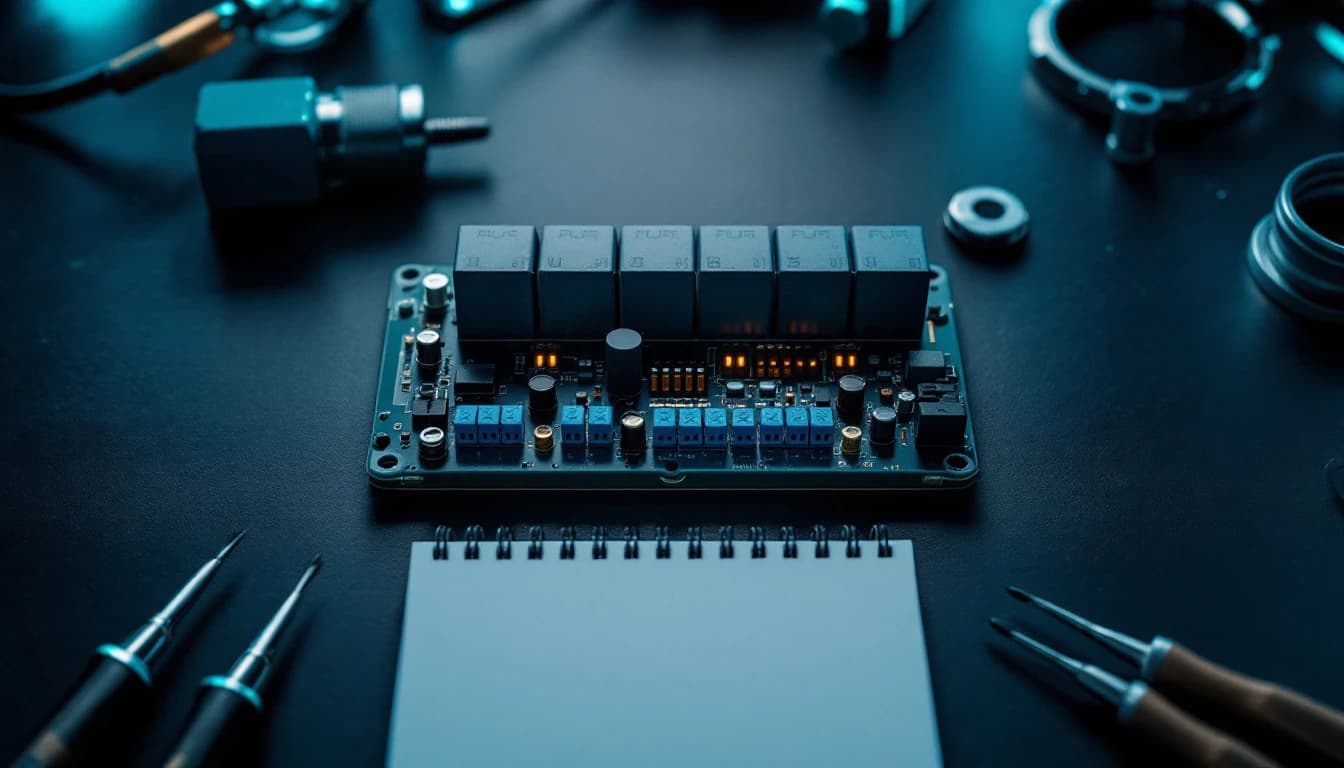
The REM is the rear body-control module on P3 S60, S80, V70, XC70, XC60 and XC90, roughly 2007 to 2016. It runs the rear lighting circuits, controls the fuel pump and manages the rear body electronics. When it fails you see rear-lighting faults, loss of fuel-pump control, or REM communication faults, and rear water intrusion is a common cause.
A used REM is coded to the car it came from, so a junkyard unit bolted in will typically throw communication and configuration faults instead of running your rear lights and fuel pump. Cloning your original's configuration and coding onto the donor is what makes it drop in. The bench price is the same 250 dollars.
Before you price a REM at all, make sure the REM is actually the problem. Rear-lighting and trunk faults have a long list of cheaper causes, and our rear electronic module failure diagnosis guide ranks them honestly, bulbs and fuses and the rear harness first, the module last. It is written to stop people mailing a healthy module.
The engine ECU: Denso and Bosch ME9.0
Volvo used two engine ECU suppliers across these years, and one service covers both:
- Denso engine ECUs in the 279700-xxxx part-number family, including Drive-E and earlier Denso applications, common on XC60, XC70, S60, S80, V60, V70 and XC90 fitments.
- Bosch ME9.0 engine ECUs on the P1 platform: S40 and V50 (about 2004-2012), C30 (about 2007-2013) and the C70 convertible (about 2006-2013), in 2.4i and T5 five-cylinder form, plus related Bosch ME units where supported.
The engine ECU carries an immobilizer relationship with the CEM. Install a used ECU and the engine cranks but never fires, because the immobilizer sees a stranger. Cloning your original's immobilizer and VIN data onto the matched donor restores the pairing, and the factory immobilizer stays active.
The one hard rule that affects cost is the supplier. A Denso original cannot be cloned onto a Bosch donor, or the reverse. Buying the wrong supplier's ECU is money spent on a part we cannot use, which is why we check both labels before you buy.
The CCM: climate control
The CCM is the HVAC controller: blower speed, temperature, air distribution and, on electronic climate cars, the display. It stores configuration and coding tied to the car, so a used CCM typically shows a dead or wrong display, loses blower and temperature control, or refuses to communicate after the swap.
The CCM service covers the P2 platform (1999-2014) and the P1 platform (2004-2013). P1 and P2 CCMs are not interchangeable in either direction, manual and electronic climate modules are different parts, and market and steering-side variants differ too. P3 and newer climate modules are not covered under this listing. Because the CCM is a comfort module rather than a security part, there is no proof-of-ownership gate, but the part number still has to match.
What actually changes the price
The bench fee is flat. These are the variables that move your real total.
1. The flat price itself
It does not change with model, model year, or how sick the module is, as long as the original can be read. A 2003 XC90 CEM and a 2014 XC60 CEM are the same 250 dollars. Two different modules from the same car are two services.
2. The return shipping tier
You choose it at checkout, once per order: standard 29.95 dollars, UPS 2-day 54.95 dollars, or overnight 94.95 dollars. If the car is off the road and you are paying for a rental, the faster tier often pays for itself. If the car is still drivable, standard is the sensible choice.
3. Donor sourcing
This is the biggest variable and the one we cannot price for you. Used module prices vary by model, platform, part number and seller. What we can do is stop you buying the wrong one. Send your original's label photo and the donor listing before you buy, and a technician confirms the match. Our checklist on buying a used donor module covers the traps, starting with listings that show a dashboard but not the module label.
4. Whether keys and the immobilizer are involved
A straight CEM swap onto a matched donor is simpler than an all-keys-lost job. Keys and immobilizer work require proof of ownership before any work begins, as explained in our proof of ownership guide. On P3 all-keys-lost, the engine ECU usually needs to be in the box too. If you need a key blade cut and do not have the key code, a door lock cylinder goes in as well.
5. Water damage
Water is a price multiplier in the worst sense. Caught early, a water-affected module is usually still readable and costs the normal 250 dollars to clone. Caught late, it may be unreadable, and the cost moves into recovery work and a longer job. Flooding is not the only source; a blocked drain or a failed seal does the same thing slowly. The National Weather Service notes that 6 inches of water will reach the bottom of most passenger cars, and at that depth floor-mounted and rear modules are exposed.
6. Turnaround and downtime
Typical bench turnaround is fast once verified modules arrive, and our CEM key programming service quotes a typical 24-hour bench turnaround. Turnaround is an estimate, not a guarantee, and it starts when a verified module is on the bench, not when you buy.
Dealer path versus mail-in
The dealer route for a failed Volvo module is usually a new part from Volvo plus a programming session on the car. It is a legitimate path, it keeps the job in one building, and on some newer platforms it is the only path. Its cost varies widely by model and region, so ask for a written quote that includes the part, labor and programming time rather than comparing against a number you heard secondhand.
The mail-in path trades that for a flat bench fee, a used donor you source, and a few days in transit. Where it wins is on older P1, P2 and P3 cars, where a used donor is plentiful and the car's value may not justify a new module.
There is also a third option that is neither. If your module is fine and the car needs software rather than a data transfer, a remote J2534 session over the diagnostic port can be the right tool. Our guide to remote Volvo VIDA programming explains when that applies. It is not a substitute for cloning a dead module, because a remote session cannot read data out of a module that has stopped answering.
"The quote is almost never the bench fee. It is the donor somebody bought off a dashboard photo, or the CEM that was readable in the spring and gone by the fall. I tell every Volvo owner the same two things: photograph the label before you buy anything, and do not park a wet module and wait." — Independent European electrical diagnostician, 20+ years on Volvo and BMW body electronics (anonymized)
How to keep the total down
- Confirm the module is the fault. Check fuses, grounds and connectors first. The cheapest module job is the one you do not need.
- Photograph the label. Part number off the case, plus your VIN, before you buy a donor.
- Ask before you buy. We verify the donor match at no charge. Unverified donors are the number one reason these jobs stall.
- Fix the leak. A cloned module installed into the same wet trunk or footwell dies the same way.
- Batch modules from the same car. Several modules in one box means one return shipping tier.
- Pick the shipping tier that matches your downtime, not the fastest by reflex.
Why these cars are worth fixing
Volvo has spent close to 100 years building its reputation on safety, and Volvo Cars still leads with it. The P2 and P3 cars in particular hold up mechanically long after their electronics start to age. Lighting matters too: the National Highway Traffic Safety Administration evaluated the center high-mounted stop lamp and found it reduced rear-impact crashes by about 4 percent over the long term, so a REM fault that kills the brake lights is a safety problem, not a cosmetic one. Before condemning any module, test the battery: Consumer Reports commonly cites a car battery life of roughly 3 to 5 years, and a tired battery on an older Volvo produces communication faults that look exactly like a failing CEM. For model history and road tests on the cars themselves, Car and Driver is a useful starting point.
For a car worth keeping, a 250 dollar clone onto a sensible donor is usually a better use of money than a replacement vehicle. The engineering standards behind the diagnostic connector and data link, published through SAE International, are the reason bench work can read these modules at all.
Frequently asked questions
How much does it cost to clone a Volvo CEM?
It is 250 dollars flat by mail-in, plus one return shipping tier chosen at checkout from 29.95 dollars. You supply a part-number-matched donor CEM, and proof of ownership is required for any key or immobilizer work.
Is the price different for P2 and P3 Volvos?
No, the bench price is the same 250 dollars on P1, P2 and P3. What differs is the donor: early and late P2 use different CEM hardware, early P3 uses a Delphi flat-end-connector variant, and P3 all-keys-lost usually needs the engine ECU shipped in too.
Why can't I just install a used Volvo module?
Because it carries the donor car's identity. A used CEM has the other car's VIN and key data, a used engine ECU has an immobilizer relationship with a different CEM, and a used REM or CCM has the other car's coding. Cloning writes your data onto it so it behaves like yours.
Does the 250 dollars include return shipping or the donor?
No to both. Return shipping is paid by you at checkout, from 29.95 dollars, and one tier covers every module in the same box. The donor is sourced by you, and we verify its part number against your original before you buy it.
Can you clone a water-damaged Volvo module?
Usually yes, if it still powers up and can be read, and sooner is better. Corrosion eventually reaches the point where the board cannot be read, and a completely dead or unreadable original cannot be cloned. Send photos, your VIN and the part number first.
Will my cloned CEM give me working remote buttons on a new key?
No. Mail-in CEM work programs the start function, so the key starts and drives the car. Programming the remote lock and unlock buttons on a Volvo is an on-car procedure through the diagnostic port and is not part of the mail-in service.
How long does a Volvo module clone take?
Bench turnaround is typically fast once your verified modules arrive, and the CEM key programming service quotes a typical 24-hour bench turnaround. Add transit time in both directions for the shipping tier you choose; turnaround is always an estimate, never a guarantee.
The bottom line
Volvo module cloning is a flat 250 dollars per module as of September 2026, for the CEM, REM, Denso or Bosch ME9.0 engine ECU, and CCM alike, plus one return shipping tier per order from 29.95 dollars. The bench fee is the predictable part of the bill.
The unpredictable part is everything around it: finding a donor with the right part number and supplier, whether the job touches keys and needs proof of ownership, whether a P3 all-keys-lost job needs the engine ECU as well, and whether water has already made the original unreadable. Every one of those gets cheaper if you ask before you buy.
Text us your VIN and a photo of the module label and we will confirm the platform, the donor match and exactly what needs to go in the box. If the fault is at the back of the car, read the REM failure guide first, and if it is keys, start with the Volvo CEM key programming and clone service.
Sources and further reading: ISO, National Weather Service, NHTSA, Volvo Cars, Consumer Reports, Car and Driver, SAE International.
Ship your module today
Flat-rate pricing, typical 24-hour bench turnaround, return speed your choice at checkout. Most jobs back on your bench within a week.